For many high earning families, renting feels responsible. It feels measured. It feels like the adult decision before making a serious commitment.
I hear it constantly. “We want to get to know the neighborhood.” “We want flexibility.” “We’ll buy once things settle down.”
Renting in NYC is not a neutral holding pattern. It is an active financial decision with long term consequences. And for families who can afford to buy, it is frequently the most expensive path.
Renting Feels Safe. NYC Is Not a Safe Market to Wait In.
Renting eliminates board packages, eliminates resale anxiety, eliminates long term commitment. That psychological relief is real.
But NYC pricing does not reward waiting. Scarcity, global demand, zoning limits, and capital concentration make this a market where delay compounds cost.
Time in New York has a price. And that price usually increases.
Rent in NYC Is Not Just a Monthly Expense
In many markets, rent is manageable relative to income. In NYC, high earners typically rent in prime neighborhoods, larger units, or full service buildings. That means they are paying premium rent, not average rent.
Six figures per year in after tax income can disappear into housing without building a single dollar of equity.
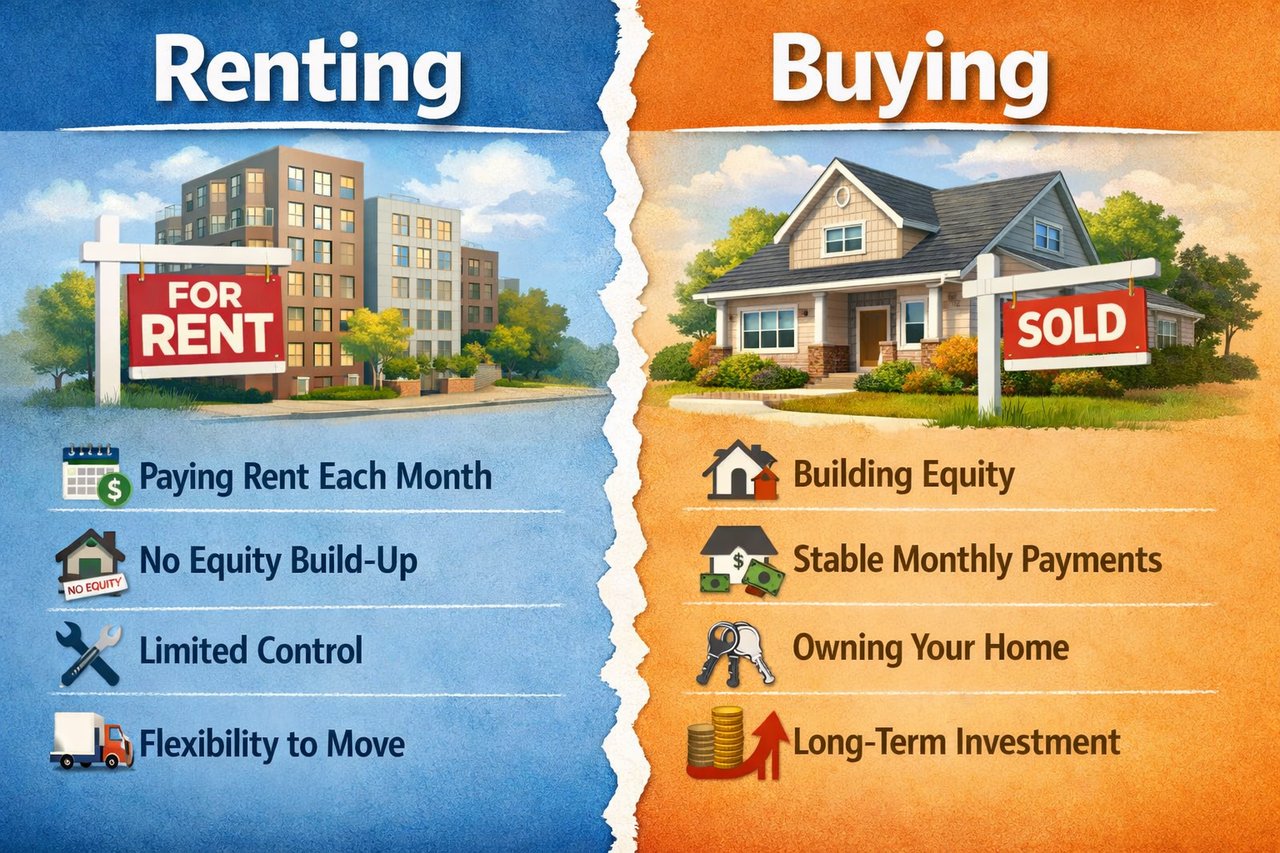
Mortgage payments reduce principal. Rent does not.
Ownership stabilizes long term cost. Rent resets every year.
For families capable of purchasing, rent is not a placeholder. It is a transfer of wealth.
High Earners Carry the Highest Opportunity Cost
The higher the income, the more damaging the delay.
High earning families qualify for better financing. They have stronger leverage. They often have access to family capital. Yet many remain renters for years out of habit rather than necessity.
During that time:
Prices appreciate.
Equity compounds for someone else.
Their purchasing power does not improve.
The opportunity cost is not theoretical. It is permanent.
Waiting Rarely Improves the Entry Point
Many families assume that renting now will make buying easier later.
In NYC, “later” often means:
Higher purchase prices.
More competition.
Fewer available family sized units.
Greater urgency.
Even if mortgage rates soften, purchase prices often offset the benefit. Meanwhile, years of rent cannot be recovered.
Renting is frequently a bet that prices will stagnate or fall. Historically, that has not been a reliable strategy in New York.
Flexibility Has Diminishing Returns
Flexibility is valuable in year one. By year three, it often becomes inertia.
Most high earners have more stability than they think. Their careers are demanding, but their income is predictable. Their lifestyle needs become clear quickly.
Yet momentum keeps them renting. Not because it is optimal, but because the transition feels complicated.
Complex does not mean wrong. It often means overdue.
Rent Inflation Compounds Quietly
Luxury rentals are not static. Annual increases in tight inventory environments can outpace income growth.
Housing begins to consume a larger percentage of income. Savings compress. Pressure builds.
Ownership shifts that inflation risk away from the family. A fixed rate mortgage locks the largest cost line item in place.
That stability alone changes long term financial trajectory.
The Math Often Surprises People
Many families assume ownership is materially more expensive than renting without running real numbers.
When you compare:
Mortgage interest
Property taxes
Common charges
Maintenance
Against premium NYC rent, the gap is often narrower than expected. In some cases, ownership is comparable or even less on a monthly basis, especially with meaningful down payments.
Assumptions frequently collapse under actual analysis.
Family Support Changes Everything
For families with access to intergenerational capital, the equation shifts dramatically.
Down payment assistance.
Intra family loans.
Co ownership structures.
These tools reduce borrowing costs and accelerate equity accumulation.
Ignoring available capital in favor of continued renting is often the most expensive version of caution.
Renting Delays Stability, Not Just Ownership
Ownership in NYC is not just financial. It anchors school decisions, community ties, and long term planning.
Renting prolongs uncertainty. It keeps life provisional. It postpones decisions that compound stability.
High earners often underestimate the non financial return of housing permanence.
Renting Is a Market Position
Choosing to rent is not neutral. It is a position.
It is a position that prices will not materially rise.
It is a position that access will improve.
It is a position that timing will become easier.
In NYC, those assumptions have historically been fragile.
When Renting First Makes Sense
There are valid reasons to rent.
Short term assignments.
True geographic uncertainty.
Major life transitions.
But for families with long term NYC intentions and financial capacity, renting first is often a default decision rather than a strategic one.
The Practical Conclusion
For high earning families, renting first often feels conservative. In NYC, it frequently proves costly.
It delays equity.
It exposes income to inflation.
It transfers wealth outward rather than building it inward.
Buying thoughtfully, even imperfectly, often produces better long term outcomes than waiting for perfect clarity.
In this market, time rarely favors the renter. If you’re renting in NYC and assuming buying later is safer, run the numbers first. I’m happy to walk through real comparisons based on your situation before another lease renewal locks you in. If you’re renting in NYC and assuming buying later is safer, run the numbers first. I’m happy to walk through real comparisons based on your situation before another lease renewal locks you in.