If you have ever walked through Clinton Hill and found yourself slowing down to study a stoop, a cornice, or a row of tall parlor windows, you are not alone. This neighborhood rewards close attention, especially if you are thinking about buying, selling, or simply understanding what gives its homes such lasting appeal. The real charm of Clinton Hill brownstones is not just in one look or one era, but in the way different architectural styles built on each other over time. Let’s dive in.
Clinton Hill’s charm is layered
Clinton Hill’s architectural story is broader than the word “brownstone” might suggest. According to the New York City Landmarks Preservation Commission, the Clinton Hill Historic District was designated on November 10, 1981, and includes a mix of rowhouses, mansions, altered historic buildings, and larger institutional structures.
That variety helps explain why the neighborhood feels so visually rich. Clinton Hill developed from early suburban villas into denser rowhouse blocks, while parts of Clinton Avenue evolved into a mansion-lined corridor often associated with the area’s Gold Coast identity. Over time, some larger homes were divided or adapted for other uses, which is why the streetscape today feels historic but never one-note.
Brownstones are only part of the picture
When people talk about Clinton Hill brownstones, they are usually responding to a familiar rowhouse rhythm. You see high stoops, tall windows, ornate entrances, and facades that create a strong sense of repetition from one house to the next. But many of these homes are not solid brownstone structures.
The Landmarks report makes clear that many Clinton Hill rowhouses are built as combinations of brick and brownstone rather than full brownstone blocks. That distinction matters because it helps you read the neighborhood more accurately. What gives these homes their elegance is often the composition of materials and details, not just the presence of brownstone on the facade.
Italianate buildings shaped the neighborhood
The classic Clinton Hill rowhouse look
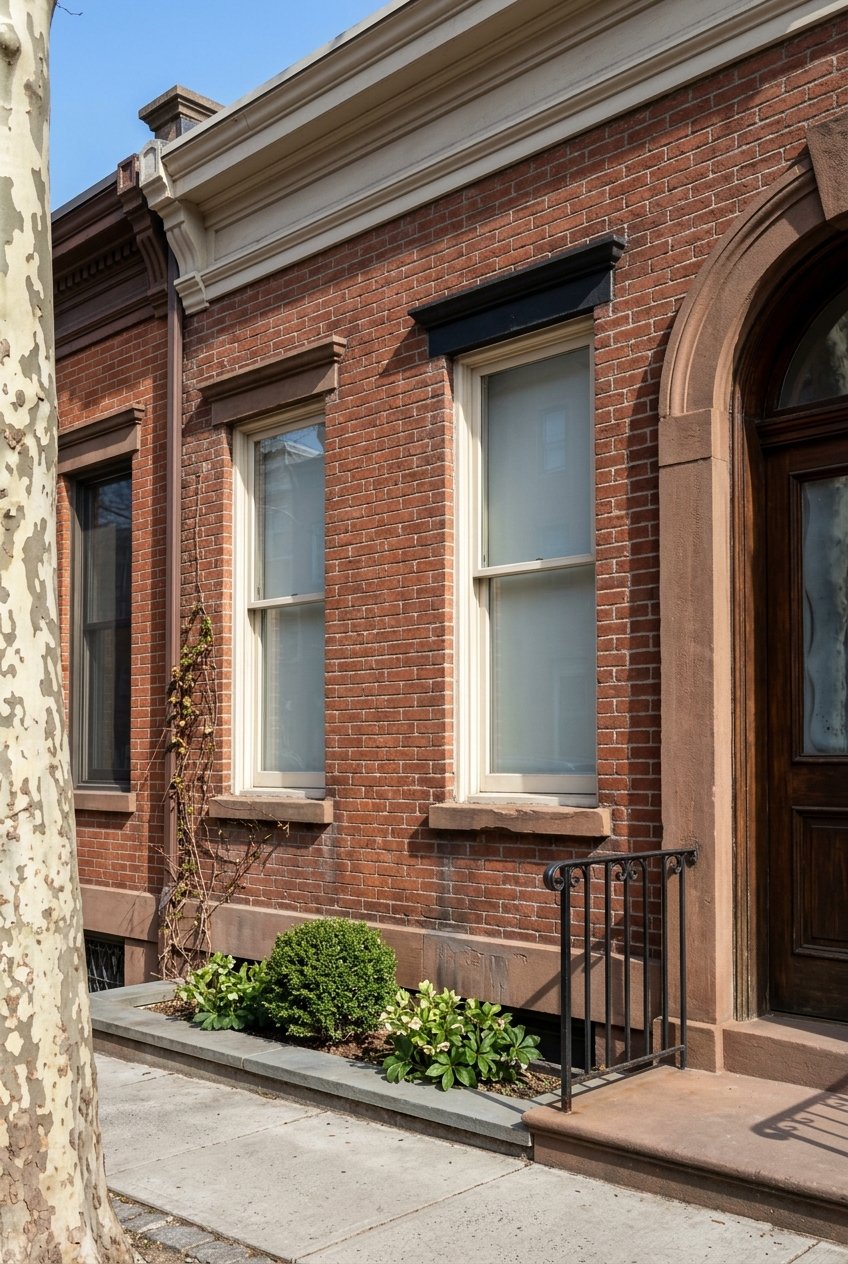
Much of Clinton Hill’s core rowhouse character comes from mid-19th-century Italianate design. These homes are often three stories over a basement and feature high stoops, round-arched or segmental-arched entrances, bracketed roof cornices, rusticated basements, and projecting window lintels and sills.
This style appears across several important streets in the historic district, including stretches of Grand Avenue, Lafayette Avenue, and St. James Place. If you love the visual order of Brooklyn rowhouses, this is often the look you are responding to. The proportions are generous, and the repeated architectural details create a calm, unified streetscape.
Why Italianate homes still feel timeless
Italianate rowhouses tend to balance ornament and simplicity well. They are decorative, but not fussy. In Clinton Hill, that makes them feel substantial and refined without losing the warmth that draws people to townhouse living in the first place.
For sellers, this style often photographs beautifully because the facade reads clearly from the street. For buyers, it can be easier to recognize original design intent when major elements like the stoop, cornice, and window openings remain intact.
Neo-Grec added sharper detail
As the neighborhood evolved, Neo-Grec design gave the same rowhouse form a more angular and graphic look. The Landmarks report describes brownstone-fronted facades with incised ornament, corbelled sills, stylized cornices, and full-height angular bays.
Where Italianate buildings often feel softer and more curved, Neo-Grec homes can look crisper and more geometric. That shift adds variety within blocks that may still share similar scale and massing. It also shows that Clinton Hill’s architecture changed gradually rather than all at once.
Later styles brought more drama
French Second Empire rooflines
By the 1870s, some Clinton Hill houses became more expressive. The district includes a row of French Second Empire brownstone-fronted houses completed in 1872, noted for mansard roofs, dormers, and refined stoops.
These rooflines add instant visual drama. If you are looking at a house and wondering why it stands out from its neighbors, the upper facade and roof profile may be the answer.
Romanesque Revival and Queen Anne texture
The neighborhood also includes Romanesque Revival and Queen Anne buildings with more varied massing and richer surface texture. The Landmarks report highlights features such as rusticated stone bases, orange brick, sandstone trim, arched porte-cocheres, asymmetry, and deeply textured facades.
Two notable examples are the Charles Millard Pratt house at 241 Clinton Avenue and the Cornelius Hoagland mansion at 410 Clinton Avenue. These buildings help show that Clinton Hill’s architectural identity extends beyond rowhouses into larger and more individually designed homes.
Classical revival styles changed the mood
By the early 20th century, some Clinton Hill buildings shifted toward Colonial Revival, Renaissance Revival, and related classical styles. The Landmarks report notes a 1909 Colonial Revival trio on Grand Avenue, along with later Pratt-family houses that move away from Victorian richness toward more restrained classical design.
This progression matters because it shows that Clinton Hill did not freeze in one architectural moment. Instead, the neighborhood accumulated styles over time. That layered history is part of what gives the area depth and long-term appeal.
Streets that best show Clinton Hill character
Grand Avenue
Grand Avenue between Gates and Putnam is one of the district’s strongest examples of a unified brownstone blockfront. The Landmarks report describes 22 brownstone houses built roughly between 1869 and 1875, with high stoops, repeating brackets, and a strong sense of continuity.
This stretch is especially useful for understanding how rhythm creates elegance. When stoops align, cornices repeat, and facade details carry from house to house, the block feels greater than any single property.
Lafayette Avenue
On Lafayette Avenue between Waverly and Washington, the south side includes a row of simple Italianate houses completed in 1867. The report notes brick and brownstone fronts, cast-iron window lintels and sills, doorway hoods, original stoops, and a notable amount of surviving detail.
This is a great reminder that architectural charm does not always depend on grandeur. Sometimes it comes from restraint, consistency, and the survival of original features.
St. James Place
St. James Place between Greene and Gates offers a slightly more modest expression of the neighborhood’s historic rowhouse character. The report describes mostly 1860s and early 1870s Italianate work in brownstone, brick, and wood.
That makes the block especially helpful if you want to understand the neighborhood beyond its most famous addresses. Clinton Hill charm includes both impressive showpieces and more middle-scale streets that still retain a strong historic feel.
Washington Avenue
Washington Avenue between Myrtle and Willoughby has a different presence. The Landmarks report says Washington Avenue, along with Clinton Avenue, was one of the two most prestigious residential streets in the district.
It began with large suburban villas and later gained substantial rowhouses and mansions, while preserving a wider, more garden-like quality than tighter rowhouse streets. That added openness gives the avenue a distinct feel within the neighborhood.
Clinton Avenue
Clinton Avenue is central to Clinton Hill’s architectural identity. The report traces its transformation from early villas to later mansions, including Charles Pratt’s 1875 house at 252 Clinton Avenue, the Charles Millard Pratt residence at 241 Clinton Avenue, later Pratt mansions, the Hoagland mansion at 410 Clinton Avenue, and the Gothic Revival villa at 284 Clinton Avenue.
If you want to understand the neighborhood’s architectural ambition, this is the street to study. It captures the scale, variety, and historic prestige that still shape how people experience Clinton Hill today.
What gives a house real character
For buyers and sellers, the most important features are often the ones that make a house feel like a complete composition. In Clinton Hill, that can include the stoop, doorway, cornice line, window proportions, ironwork, and the relationship of the facade to neighboring houses.
The Landmarks report repeatedly points to details such as bracketed roof cornices, pedimented entrances, rusticated basements, cast-iron elements, mansards, dormers, bays, and areaway railings. When several of those elements survive together, the house typically reads more clearly as part of its original streetscape.
That matters in practical terms too. A house that retains its architectural language often makes a stronger first impression, both in person and in marketing.
Alterations can change the feel
Not every historic house remains fully intact. The official report documents common alterations that can weaken the historic look of a Clinton Hill facade, including removed stoops, shaved ornament, shortened parlor windows, replaced cornices, stucco over original masonry, and widened or simplified openings.
That does not mean a house loses all value or appeal. It does mean that original or compatible details can have an outsized effect on how the property is perceived. If you are preparing to sell, understanding which exterior elements still read well can help shape smart decisions about presentation and positioning.
Why historic district status matters
Clinton Hill’s architectural significance is formal as well as visual. The neighborhood includes a designated historic district, and the Landmarks Preservation Commission states that it must approve most exterior alterations, reconstruction, demolition, and new construction affecting designated properties.
At the same time, designation does not freeze a building in place. The Commission explains that ordinary exterior repairs and most interior work generally do not require review, and that proposed changes are evaluated based on whether they are appropriate to the district’s character.
For owners and future buyers, that is an important distinction. Historic district status helps preserve the readability of the streetscape, which is a major part of what supports Clinton Hill’s enduring architectural appeal.
Why this matters when buying or selling
If you are buying in Clinton Hill, architectural charm is more than a romantic extra. It affects how a house lives in the context of the block, how it is perceived from the street, and how well it reflects the neighborhood’s historic identity.
If you are selling, those same details can help shape pricing, marketing, staging choices, and buyer interest. Original or compatible features, intact facade elements, and a strong relationship to the surrounding streetscape can all strengthen a property’s story.
That is especially true in a neighborhood where buyers often care deeply about townhouse character and block presence. In Clinton Hill, charm is not just in the stone. It is in the rhythm, proportion, and continuity of the whole street.
If you are considering a sale, planning your next move, or sorting through a legacy property with architectural value, working with someone who understands Brooklyn rowhouses can make the process much clearer. To request a complimentary market or probate consultation, connect with Ronit Abraham.
FAQs
What architectural styles define Clinton Hill brownstones?
- Clinton Hill is shaped by Italianate and Neo-Grec rowhouses, along with French Second Empire, Romanesque Revival, Queen Anne, Colonial Revival, and other classical revival styles documented by the New York City Landmarks Preservation Commission.
What features give a Clinton Hill house its historic character?
- Key features include high stoops, bracketed cornices, rusticated basements, original window proportions, decorative doorways, ironwork, mansards, dormers, bays, and areaway railings that still read as part of a complete facade composition.
What are the best streets to study Clinton Hill architecture?
- Grand Avenue, Lafayette Avenue, St. James Place, Washington Avenue, and Clinton Avenue are especially useful reference points because they show different scales, styles, and levels of intact historic detail within the district.
What changes can reduce a brownstone’s historic look in Clinton Hill?
- The Landmarks report notes that removed stoops, shaved ornament, shortened parlor windows, replaced cornices, stucco over original masonry, and widened openings can weaken a building’s historic appearance.
What does historic district status mean for Clinton Hill homeowners?
- In the Clinton Hill Historic District, the Landmarks Preservation Commission must approve most exterior alterations, reconstruction, demolition, and new construction, while ordinary exterior repairs and most interior work generally do not require review.