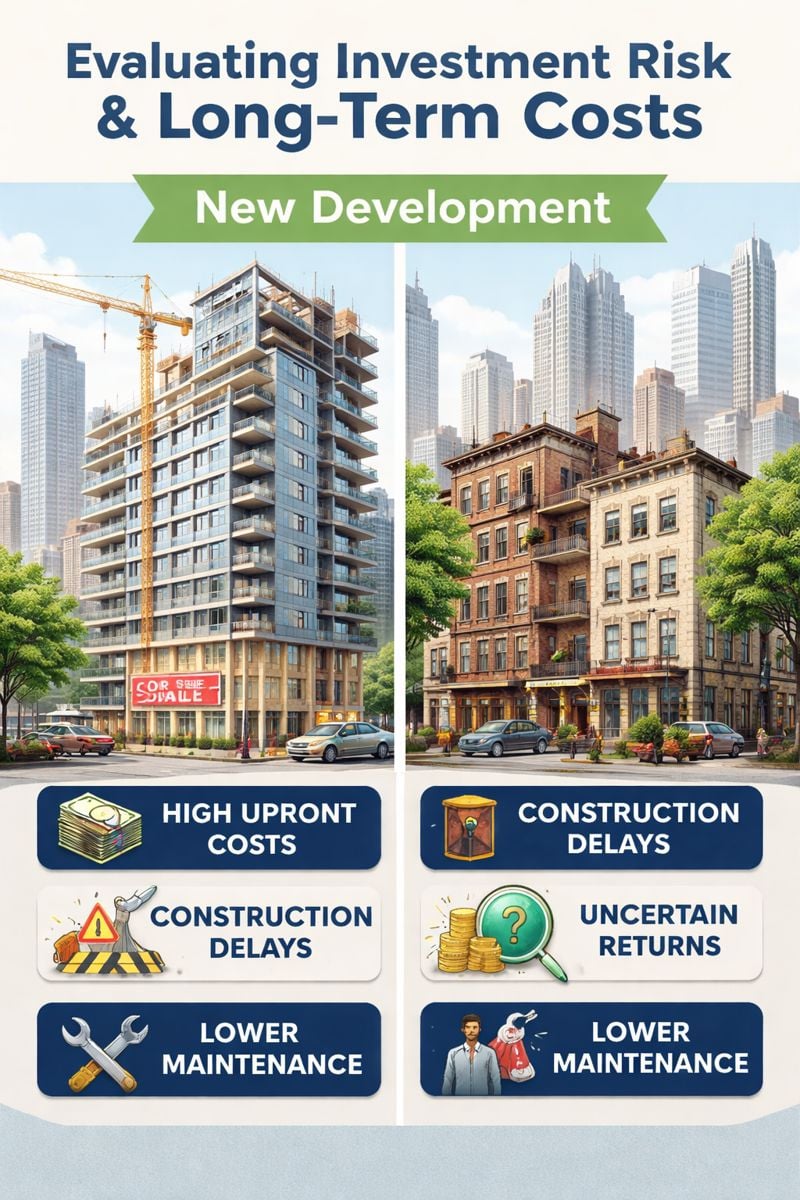
In New York City, the decision between new development and resale property should always be evaluated through an investment lens. Purchase price is only one variable. Liquidity, competition, building maturity, neighborhood pipeline, and long-term carrying costs play an outsized role in determining real performance over time.
A property that feels premium at launch in NYC does not automatically translate into a strong long-term investment.
Resale Competition Risk in the NYC Market
New development buyers in New York often re-enter the resale market within five to seven years. At that point, competition can be far more intense than many buyers anticipate.
Common sources of resale competition in NYC include:
-
New condo developments launching nearby, often with fresher finishes and incentives
-
Additional phases of the same project coming online
-
Sponsor or early-buyer resales within the building priced aggressively
-
Shifts in design preferences that make earlier interiors feel dated
In fast-building neighborhoods like Downtown Brooklyn, Long Island City, Williamsburg, or parts of Manhattan’s West Side, a building that felt market-leading at launch can lose its edge quickly.
Building Turnover and Neighborhood Absorption in NYC
Unlike many markets, NYC pricing is deeply influenced by supply pipelines and absorption rates, not just demand. Buyers should look beyond the building itself and assess the broader neighborhood.
Key NYC-specific questions include:
-
How quickly do units resell within the building?
-
Are price reductions common on resales?
-
Is the neighborhood still absorbing new inventory or becoming oversupplied?
-
Are there upcoming rezonings or large developments in the pipeline?
High inventory combined with slow absorption can materially limit resale pricing, even in otherwise desirable neighborhoods.
How to Read a NYC Development Pipeline Map
In New York City, understanding future supply is just as important as understanding current pricing. A development pipeline map shows where new residential projects are planned, approved, or under construction, often years before they hit the market.
These maps typically include:
-
Projects under construction
-
Approved developments not yet started
-
Large rezoning areas that allow for future density
While not every approved project gets built immediately, pipeline data gives critical insight into future competition.
Why the Pipeline Matters for Buyers
If multiple large developments are scheduled within a few blocks of a building, future resale competition may increase significantly. Even if demand remains strong, additional supply can limit price growth and extend selling timelines.
In NYC neighborhoods experiencing active development, such as Downtown Brooklyn, Long Island City, parts of Williamsburg, and select Manhattan corridors, pipeline risk can weigh on resale values for years.
What to Look For
When reviewing a pipeline map, buyers should consider:
-
The number of units planned nearby, not just the number of buildings
-
The expected completion timeline, especially overlapping deliveries
-
Whether new projects target similar price points and buyer profiles
A neighborhood with steady absorption can handle new supply. A neighborhood already saturated may struggle.
How This Affects Investment Risk
Pipeline risk doesn’t mean you should avoid new development. It means pricing, timing, and hold period matter more. Buyers who plan shorter holds or rely on resale liquidity should be especially cautious in areas with heavy future construction.
Understanding the pipeline helps buyers avoid being surprised by competition they could have seen coming years earlier.
Design and Amenity Longevity in NYC Condos
In New York, not all design choices age well. Long-term value tends to favor buildings with:
-
Functional layouts that prioritize usable square footage
-
Timeless materials rather than trend-driven finishes
-
Amenities that remain relevant beyond initial marketing cycles
Over-amenitized buildings often carry higher operating costs, and features that once drove excitement can become liabilities as tastes shift and maintenance expenses rise.
Monthly Carrying Costs: New Development vs. Resale in NYC
In NYC, the difference between new development and resale pricing goes well beyond the purchase price. Monthly carrying costs, including common charges and real estate taxes, can significantly affect affordability, liquidity, and long-term investment performance.
Below is a simplified NYC-style comparison:
| Category | New Development | Resale Property |
|---|---|---|
| Purchase Price | $1,500,000 | $1,300,000 |
| Common Charges | $1,750/month | $1,050/month |
| Real Estate Taxes | $250/month (abated) | $1,200/month |
| Insurance & Misc. | Similar | Similar |
Year One vs. Long-Term Ownership in NYC
Many NYC new developments benefit from temporary tax abatements, which can make early ownership appear more affordable. Once those abatements expire:
-
Monthly taxes can rise sharply
-
Total monthly costs may exceed comparable resale units
-
Buyer pools may shrink due to higher ongoing expenses
In a city where affordability directly affects liquidity, underestimating long-term monthlies can materially impact resale value.
Liquidity and Hold Period Considerations in New York
Resale properties in NYC generally offer:
-
More predictable comparable sales
-
An established resale history
-
Lower long-term carrying costs
New development can work well for buyers planning to hold long-term and ride out market cycles. However, short- to mid-term sellers may struggle to recover the premium paid at purchase, particularly in neighborhoods with ongoing new construction.
The NYC Takeaway
In New York City, investment outcomes depend less on whether a property is new or resale and more on timing, neighborhood supply, competition, liquidity, and total cost of ownership.
Understanding resale dynamics, development pipelines, and how carrying costs evolve over five to ten years is essential for making informed NYC real estate decisions.
Considering New Development or Resale in NYC?
If you’re weighing new construction against resale in New York City, I can model long-term scenarios, resale risk, and five- to ten-year carrying costs so you understand the full financial picture before committing.