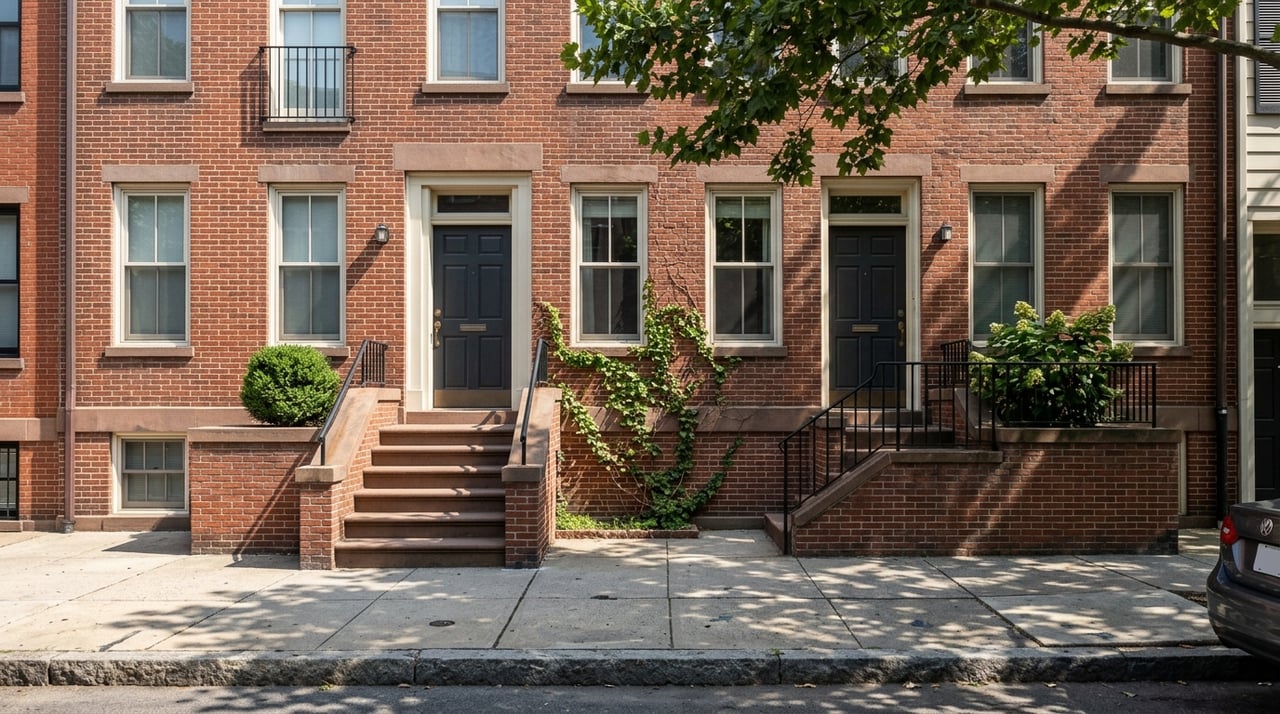
Thinking about buying a multi-family building in Crown Heights? You are not alone. This Brooklyn neighborhood sits in a sweet spot where rents, sale prices, and yield potential can look appealing, but the numbers can change fast from one block to the next. If you want to invest here with confidence, you need more than a neighborhood headline. You need a grounded, block-by-block view of how Crown Heights really works. Let’s dive in.
Why Crown Heights Draws Multi-Family Investors
Crown Heights stands out as a middle-market Brooklyn submarket with a mix of older housing stock, newer development, and strong renter demand. Public data for Brooklyn Community District 8, the closest official proxy for Crown Heights, shows the area had the city’s 13th most expensive rents in 2023 and a rental vacancy rate of 2.7%.
That low vacancy rate matters if you are evaluating tenant demand. It suggests renters are still competing for available housing, which can support occupancy and resale interest for income-producing properties. The same district also added 5,751 housing units in buildings with 4 or more units from 2010 to 2024, and about 70% of those were estimated to be market-rate.
The neighborhood also benefits from practical location advantages. Crown Heights offers access to the 2, 3, 4, and 5 trains, the Long Island Rail Road, more than 10 bus lines, and destination points like Prospect Park and the Brooklyn Museum. Along corridors like Nostrand Avenue, the commercial activity adds to everyday convenience and helps support ongoing renter demand.
What the Rental Market Is Telling You
If you are underwriting a deal in Crown Heights, rent assumptions deserve extra care. StreetEasy shows current median base rent in Crown Heights at $3,300, which is level with Bedford-Stuyvesant and very close to Prospect Lefferts Gardens at $3,305. Prospect Heights comes in higher at $4,300, which reinforces that Crown Heights can offer a different price-to-income profile.
Recent momentum is also worth watching. MNS reported that Crown Heights rents rose 4.97% month over month in April 2026, which outpaced Bedford-Stuyvesant at 1.35% and the Brooklyn-wide monthly increase of 1.16%. That does not guarantee future rent growth, but it does show current pricing strength.
Longer-term data adds context. Furman Center reports that real median gross rent in the Crown Heights and Prospect Heights district rose from $1,300 in 2006 to $2,140 in 2023. That kind of long-range increase helps explain why investors continue to watch the area closely.
Unit-size rent benchmarks nearby
Crown Heights data is often reported at the neighborhood level, so nearby Bedford-Stuyvesant can be a practical reference for small-building underwriting. StreetEasy lists median base rents there as:
- Studio: $2,574
- One-bedroom: $3,200
- Two-bedroom: $3,495
- Three-bedroom: $3,972
These numbers are not a substitute for a building-specific rent roll or comparable leases. Still, they can help you pressure-test assumptions for smaller walk-ups, townhouses, and rowhouse conversions in the broader brownstone belt.
Sales Prices and Yield Signals
One reason Crown Heights gets attention from investors is that it sits between lower-priced and higher-priced nearby submarkets. Redfin reported a March 2026 median sale price of $1,327,500 in Crown Heights, up 18.0% year over year. That placed it below Bedford-Stuyvesant at $1,691,500 and Prospect Heights at $1,498,459, but above Prospect Lefferts Gardens at $995,000.
PropertyShark’s April 2026 snapshot showed a different median sale price of $1.1 million with 13 transactions and a median of $1,023 per square foot. The exact number varies by source because the sample set and map boundaries are different. The bigger takeaway is that pricing has remained active, but not uniform across product types.
PropertyShark also found that condo medians were up 75.7% year over year to $1.3 million, houses were down 13.1% to $1.8 million, and co-ops were up 6.3% to $340,000. For investors, that split is a reminder that one headline price for Crown Heights rarely tells the whole story.
How cap rates compare
Cap rates in Brooklyn have moved enough to matter. Ariel Property Advisors reported Brooklyn’s average cap rate rose to 6.96% in 2025, the highest level since 2012. That creates a more yield-conscious environment than the ultra-compressed periods many investors got used to.
In Crown Heights specifically, public signals suggest a meaningful range rather than a single clear benchmark. TerraCRG reported a 2025 mixed-use sale at about a 6% cap rate, while asking cap rates on current apartment-building listings have ranged from about 5.9% to 9.72%. Asking cap rates are not closed-sale averages, but they can still help frame expectations.
The main lesson is simple: Crown Heights is not one cap-rate market. Building condition, unit mix, rent regulation, and exact location can push the economics in very different directions.
Best Building Types for Different Investors
Not every multi-family asset in Crown Heights serves the same goal. The neighborhood includes older rowhouses, townhouses, small walk-up apartment buildings, mixed-use buildings on commercial corridors, and newer rental or condo product. Each comes with a different pricing profile and management reality.
For many buyers, the most relevant property types are:
- 2- to 4-family townhouses and rowhouses
- 4- to 6-unit walk-up buildings
- Mixed-use properties on active commercial streets
If you are an owner-occupant who wants rental income, a 2- to 4-family building may offer the most flexibility. If you are focused on yield and operational scale, a 4- to 6-unit walk-up may make more sense. Mixed-use properties can offer upside too, but they usually require a sharper read on both residential and retail risk.
Rent Stabilization Can Change the Deal
In Crown Heights, rent regulation is one of the biggest underwriting variables. The New York City Rent Guidelines Board says buildings that generally contain stabilized units have 6 or more units, were built before 1974, and are not co-ops or condos. Newer buildings can also include stabilized units if they received tax benefits such as 421-a or J-51.
That does not mean every apartment in a qualifying building is stabilized. The Rent Guidelines Board states that its building lists do not identify which specific apartments are stabilized, and New York State Homes and Community Renewal is the address-based source for that information.
For investors, the takeaway is clear. You should not base a value-add plan on what a renovated market-rate unit might rent for unless the actual rent history supports that path. In Crown Heights, paperwork often matters as much as curb appeal.
Historic District Rules Matter More Than You Think
Some of Crown Heights falls within designated historic districts, including Crown Heights North, Crown Heights North II, Crown Heights North III, and nearby mapped districts that overlap the broader area. The Landmarks Preservation Commission must approve certain changes involving designated buildings, including alterations, reconstruction, demolition, and new construction.
That can affect renovation timelines, costs, and design choices. If your investment strategy depends on façade work, window replacement, rooftop additions, or major exterior repositioning, historic status can become a very real part of your budget and schedule.
This is one of the clearest reasons to underwrite by address, not by neighborhood label. Two similar-looking buildings can have very different constraints depending on landmark status.
Zoning and New Supply Deserve a Closer Look
Zoning is another reason broad neighborhood averages only tell part of the story. New York City Planning notes that R6 districts are commonly mapped in medium-density parts of Brooklyn, including built-up areas like this one. That shapes what already exists and what may be possible on a given lot.
You should also pay attention to future supply near major corridors. The Atlantic Avenue Mixed-Use Plan, approved on May 28, 2025, is expected to create about 4,600 homes, including about 1,900 affordable units, along the Atlantic Avenue corridor near Crown Heights and Bedford-Stuyvesant.
That does not mean every nearby block will be affected the same way. It does mean investors should study pipeline activity, zoning context, and nearby redevelopment plans before assuming future competition or upside.
Crown Heights vs Nearby Brooklyn Submarkets
Crown Heights often appeals to buyers who want a balance between rent strength and pricing that may still leave room for yield. Compared with nearby areas, it tends to sit in the middle.
| Submarket | Median Base Rent | Median Sale Price Signal |
|---|---|---|
| Crown Heights | $3,300 | $1.1M to $1.33M |
| Bedford-Stuyvesant | $3,300 | $1.69M |
| Prospect Heights | $4,300 | $1.50M |
| Prospect Lefferts Gardens | $3,305 | $995K |
This snapshot helps show why Crown Heights attracts both investors and owner-occupants. It offers rents that are competitive with nearby neighborhoods, while sale pricing and cap-rate signals can still vary enough to create opportunity.
How to Underwrite Crown Heights Smarter
If you are serious about investing here, a neighborhood-average approach is not enough. You need to analyze the building, the block, and the legal framework around it.
Start with these questions:
- What is the actual rent roll today?
- Are any units rent stabilized?
- Is the property in a historic district?
- What zoning applies to this lot?
- What comparable rents support your unit-by-unit projections?
- How does the building type fit your strategy: owner-occupant, long-term hold, or yield-focused investment?
The better your questions, the better your pricing discipline. In Crown Heights, smart investing usually comes down to avoiding broad assumptions and focusing on details that directly shape income, renovation scope, and exit value.
If you are evaluating a brownstone, townhouse, or small multi-family property in Crown Heights, having local guidance can make the numbers far more useful. Ronit Abraham brings a Brooklyn-focused, hands-on approach to multi-family and townhouse transactions, with practical support that helps you assess opportunities clearly and move forward with confidence.
FAQs
What makes Crown Heights attractive for multi-family investing?
- Crown Heights combines low vacancy, strong renter demand, competitive median rents, and a range of building types that can suit both owner-occupants and yield-focused investors.
What rent range is realistic for Crown Heights apartments?
- Current median base rent in Crown Heights is $3,300, and nearby Bedford-Stuyvesant provides useful size-based benchmarks from $2,574 for studios to $3,972 for three-bedrooms.
How important is rent stabilization in Crown Heights multi-family deals?
- It is very important because many older buildings with 6 or more units may include stabilized apartments, and your income assumptions should be verified through building and rent-history research.
How do Crown Heights prices compare with nearby Brooklyn neighborhoods?
- Crown Heights sale prices generally sit below Bedford-Stuyvesant and around or below Prospect Heights depending on source, while remaining above Prospect Lefferts Gardens in recent reported data.
Why does block-by-block analysis matter in Crown Heights?
- Block-by-block analysis matters because landmark status, zoning, building type, and rent regulation can vary widely and materially change renovation options, operating income, and resale potential.