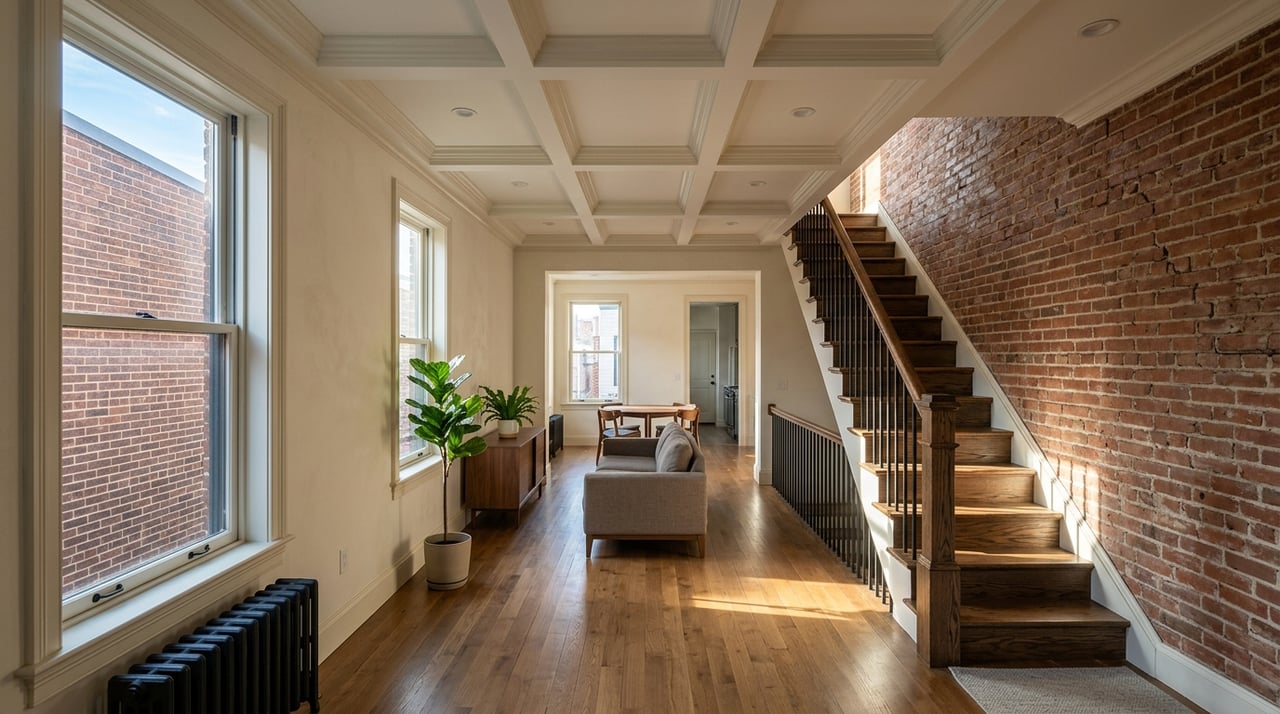
If you picture townhouse living as wide rooms, easy renovations, and a quiet separation from the street, West Village may surprise you. Living here is often more intimate, more vertical, and more shaped by preservation rules than buyers first expect. If you are considering a West Village townhouse, it helps to understand how the neighborhood’s architecture, landmark protections, and daily rhythm affect real life before you buy. Let’s dive in.
West Village townhouse living starts with context
A West Village townhouse is not one single property type. The neighborhood overlaps several historic districts identified by the New York City Landmarks Preservation Commission, including the Greenwich Village Historic District, its extensions, Charlton-King-Vandam, MacDougal-Sullivan Gardens, and Weehawken Street.
That matters because the area developed over time rather than all at once. Historic district materials describe early rowhouses alongside later tenements, flats, factories, stables, warehouses, and institutional buildings, which helps explain why one block can feel very different from the next.
For you as a buyer, this means two things. First, the streetscape has a strong sense of continuity and character. Second, each townhouse may have its own legal setup, layout, and renovation history, even when homes look similar from the outside.
Expect a vertical layout
Many West Village townhouses follow a classic New York rowhouse pattern. These homes are typically narrow, spread across multiple levels, and designed to make the most of limited frontage.
A common setup is the parlor-level layout. In that arrangement, you enter up a front stoop, the parlor floor sits above street level with higher ceilings and larger windows, upper floors are often used for bedrooms, and the garden level may serve as a kitchen, family room, or separate apartment.
This kind of layout can feel elegant and efficient, but it also changes how you use the home every day. You may move up and down stairs often, divide activities by floor, and feel much more connected to the street than you would in a detached house.
Why floor-by-floor living matters
Vertical homes create a different rhythm than single-level apartments or suburban houses. Entertaining may happen on one floor, sleeping on another, and casual daily living on the garden level.
That setup can be a great fit if you like separation between spaces. It can feel less convenient if you want everything on one level or prefer a more open, spread-out floor plan.
Configuration can vary by address
Historic district reports note that many houses in the far-west Village were later converted into multiple dwellings or rooming houses. Because of that history, legal configuration can vary widely from one property to another.
In practical terms, you should not assume that every townhouse offers the same use, layout, or flexibility. Two houses on the same block may have very different interior arrangements and ownership considerations.
Landmark rules shape ownership
One of the biggest differences between owning a West Village townhouse and owning a similar home elsewhere is the role of landmark oversight. In much of the neighborhood, exterior work is reviewed under New York City’s Landmarks Law.
According to the Landmarks Preservation Commission, most exterior changes to front and rear facades in historic districts require review. Ordinary maintenance, such as repainting to match the existing color or replacing broken glass, generally does not.
The key point is not that changes are impossible. It is that exterior work often takes more planning, more documentation, and more patience than it would in a non-landmarked area.
Projects may take more advance planning
If you are thinking about replacing windows, adjusting a stoop, doing roof work, or adding onto the rear of the home, you should expect a more structured process. Based on LPC permit rules, even work on exterior areas not visible from the street can require review.
That makes due diligence especially important. If a townhouse already has altered windows, rear additions, or visible exterior updates, you will want to understand what has been approved and what future changes may involve.
Preservation is part of the value
For many buyers, landmark regulation is not just a restriction. It is also part of the reason the West Village feels the way it does.
Protected facades, stoops, and street walls help preserve a consistent low-rise environment that is increasingly rare in Manhattan. When you buy here, you are often choosing a preserved historic setting as much as the house itself.
Daily life is walk-first and park-connected
West Village townhouse living is not only about the building. It is also about how easily daily routines connect to parks, sidewalks, errands, and transit.
On the west side of the neighborhood, Hudson River Park’s Greenwich Village section runs from Canal Street to Gansevoort Street. It includes an uninterrupted esplanade, lawns, Pier 40 ballfields and boating, Pier 45’s riverside lawn at Christopher Street, Pier 46’s turf lawn and seating, a dog park, a playground, bike-share access, and compost drop-offs.
Washington Square Park adds another major open-space anchor nearby. City improvements created an accessible plaza and fountain area, expanded lawns, a playground, a stage, pétanque courts, a dog run, a chess plaza, seating areas, and public restrooms.
Together, these spaces support a daily rhythm that often feels very local and very walkable. You can move from townhouse block to riverfront path to neighborhood square without needing to plan your day around a car.
Street life is part of the experience
Because many West Village homes sit close to the sidewalk, neighborhood activity feels near at hand. You are not buffered by large setbacks or long driveways.
For some buyers, that close relationship to the street is exactly the appeal. It creates a sense of energy and connection that feels distinctly Manhattan.
Transit remains a major advantage
A townhouse lifestyle in West Village does not mean giving up convenience. Transit access remains one of the neighborhood’s strongest practical benefits.
MTA maps show Christopher St-Stonewall on the 1 line and West 4 St-Washington Sq with A, C, E, B, D, F, and M service. That gives you access to multiple directions and transfer options within a short reach of the neighborhood.
For buyers who want the character of a historic house without losing connectivity, this is a major part of the value. You get a more house-oriented living experience while staying closely tied to the rest of Manhattan and beyond.
West Village vs. Brooklyn townhouse living
If you have also been looking in Brooklyn, the townhouse format may feel familiar. The broader tradeoff is similar in both places: multiple floors, stairs, period detail, and homes that often reward buyers who appreciate architectural character.
The difference is usually context and scale. Research on the West Village highlights early-19th-century rowhouses, mixed-use blocks, and later conversions, while general townhouse guidance notes that some Brooklyn neighborhoods such as Brooklyn Heights, Park Slope, and Cobble Hill often have larger houses on average.
In simple terms, West Village tends to feel denser, older, and more central. Brooklyn townhouse neighborhoods may offer more interior scale in some cases, while West Village often delivers a tighter urban fabric and a more Manhattan-focused day-to-day pace.
Which setting fits your priorities?
If you want a preserved Manhattan streetscape, close access to major parks, and strong subway connectivity, West Village may feel hard to match. If your top priority is maximizing interior size within a townhouse format, some Brooklyn neighborhoods may deserve a closer look.
That is why buying a townhouse is never only about square footage. It is about how you want to live in the space and around it.
What to keep in mind before you buy
A West Village townhouse can be deeply rewarding, but it helps to go in with clear expectations. The lifestyle is often charming, historic, and highly connected, but it is also shaped by stairs, lot constraints, and preservation review.
As you compare options, focus on the specifics of the individual property rather than the romance of the idea alone. Layout, legal configuration, and the path for any future exterior work can have as much impact on daily life as the block itself.
If you are weighing a West Village townhouse against a Brooklyn rowhouse or planning a sale of a legacy property, that kind of detail-first guidance can make a real difference. For thoughtful advice on townhouses and complex residential transitions, Ronit Abraham offers a warm, hands-on approach grounded in New York rowhouse expertise.
FAQs
What is a West Village townhouse layout usually like?
- A West Village townhouse often has a vertical layout with a stoop entry, a parlor floor above street level, bedrooms on upper floors, and a garden level that may be used for living space, a kitchen, or in some cases a separate apartment.
What do landmark rules mean for a West Village townhouse owner?
- In many parts of West Village, most exterior changes to front and rear facades require review by the New York City Landmarks Preservation Commission, while ordinary maintenance like repainting to match the current color or replacing broken glass generally does not.
What makes West Village townhouse living different from Brooklyn townhouse living?
- West Village townhouse living often feels denser, older, and more Manhattan-centric, while some Brooklyn townhouse neighborhoods may offer larger houses on average with a different neighborhood scale.
How walkable is daily life in West Village for townhouse owners?
- Daily life in West Village is often walk-first because the neighborhood combines dense local streets with access to Hudson River Park, Washington Square Park, and nearby subway stations.
What subway access do West Village townhouse buyers have?
- West Village is served by nearby stations including Christopher St-Stonewall on the 1 line and West 4 St-Washington Sq on the A, C, E, B, D, F, and M lines.
Why can one West Village townhouse be different from another on the same block?
- Historic district documentation shows that many buildings in the area evolved over time and some were converted into multiple dwellings or rooming houses, so legal configuration and interior layout can vary widely by address.