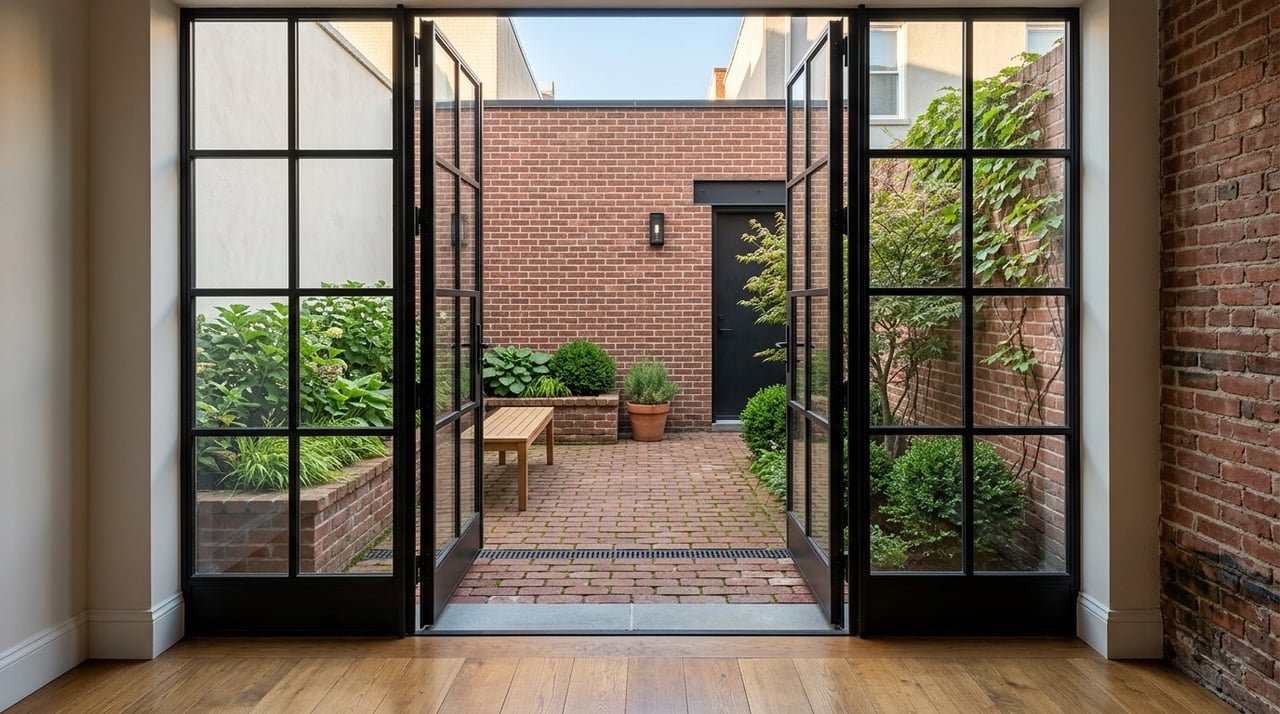
Thinking about moving up from a condo, co-op, or smaller house into a Brooklyn townhouse? Crown Heights deserves a serious look. If you want more space, flexible use, and classic brownstone Brooklyn character without reaching Park Slope or Fort Greene pricing, this neighborhood may offer the balance you have been searching for. Here’s what to know before you start comparing blocks, budgets, and building types. Let’s dive in.
Why Crown Heights stands out
For move-up buyers, Crown Heights sits in an interesting middle ground. StreetEasy shows a median sale price of about $1.2 million in the neighborhood, while Realtor.com reports a median listing price of $1,199,000. That puts Crown Heights below nearby higher-premium brownstone neighborhoods like Park Slope and Fort Greene, which StreetEasy places closer to $1.7 million median sale prices.
That does not make Crown Heights a bargain-basement option. It does mean you may find townhouse scale at a lower entry point than in some of Brooklyn’s most expensive brownstone areas. If your goal is to gain space and flexibility while staying in brownstone Brooklyn, that value gap matters.
What the market looks like now
The current market appears active, but not frenzied. StreetEasy reports 58 median days on market in Crown Heights, Realtor.com shows 50 median days, and Redfin’s townhouse-specific data shows 62 median days on market. Taken together, those numbers suggest that buyers have room to evaluate options and negotiate, especially compared with a truly overheated market.
Realtor.com also says homes are selling for about 98% of asking price on average. That points to a market where pricing still matters, but sellers may not be getting every last dollar of their initial ask. For a move-up buyer, that can create openings on homes that need work, have been sitting longer, or are priced aggressively.
There are also signs of stability rather than major decline. Realtor.com reports the median listing price is up 1.01% year over year, while median days on market are down 10.71% year over year. In plain terms, well-positioned homes are still drawing attention.
What a Crown Heights townhouse can offer
One of the biggest reasons buyers move up into Crown Heights is the housing stock itself. In the Crown Heights North Historic District, the NYC Landmarks Preservation Commission describes a mix of late-19th- and early-20th-century row houses and two-family houses, including limestone, brownstone, and brick buildings in styles such as Renaissance Revival and Romanesque Revival.
That history shows up in the day-to-day experience of shopping here. Compared with many condos, townhouses in Crown Heights can feel wider, more varied, and more adaptable. You are not just buying square footage. You are often choosing among different layouts, legal configurations, architectural details, and renovation histories.
Recent listings show that range clearly. Redfin’s 5 Hampton Place is listed as an 18-foot-wide two-family townhouse with 4 bedrooms, 5 baths, and 3,396 square feet. StreetEasy’s 594 Eastern Parkway is a two-family brownstone with 7 bedrooms, 3 baths, and 3,355 square feet, built in 1899, while 1447 Dean Street is listed at 6 bedrooms, 6 baths, and 3,176 square feet.
For you as a move-up buyer, that means Crown Heights can support several goals at once:
- More living space than a typical apartment
- Room for work-from-home needs or guest space
- A two-family setup with flexibility for household use
- Long-term upside in a property with architectural character
Why condition matters so much
In Crown Heights, price differences often reflect renovation level as much as location. A gut-renovated home can command a very different price from a property that needs updates, layout changes, or exterior work.
For example, 5 Hampton Place is listed at $2.995 million and described as gut-renovated with a private garden. By contrast, 594 Eastern Parkway had a 4% price reduction and had been on the market for 66 days as of mid-June 2026. That comparison is a helpful reminder that turnkey and value-add properties do not trade the same way.
If you are stretching to buy more space, be honest about your appetite for projects. A home that looks cheaper up front may require more cash, time, and coordination after closing. A move-in-ready townhouse may cost more initially but reduce disruption and uncertainty.
How to compare block by block
Crown Heights is not a neighborhood where every block feels the same. Transit access, traffic, street noise, and commercial activity can vary meaningfully depending on where you land.
Transit is one of the area’s biggest strengths. The MTA lists Crown Heights-Utica Av on the 3 and 4 lines, and Eastern Pkwy-Bklyn Museum on the 2 and 3 lines. The Franklin Avenue Shuttle adds more connectivity, linking service toward the A, C, and Q, with a free transfer at Botanic Garden to the 2, 3, 4, and 5.
That kind of subway depth can make a real difference if you are moving up but still want a practical commute. At the same time, StreetEasy notes that transit quality varies by block, so proximity should be measured carefully rather than assumed.
Noise and traffic also deserve attention. StreetEasy flags Eastern Parkway as a busy roadway and notes that residential streets can be loud and hectic. When you tour, details like bedroom placement, rear-garden quiet, porch usability, and traffic exposure can have a direct effect on your quality of life.
Why layout matters more than price per foot
Move-up buyers often start with a simple question: how much house can I get for my money? That is useful, but in Crown Heights, layout and legal setup may matter more than a basic price-per-square-foot comparison.
A two-family townhouse may offer flexibility, but you still need to understand how the space actually works for your plans. Is the owner’s area configured in a way that fits your daily routine? Does the building’s setup support the way you want to use the garden, cellar, or upper floors? Does the level of finish match your timeline and budget?
This is where a neighborhood-specific search can save time. Two homes with similar square footage can feel completely different in function, light, privacy, and renovation burden.
Landmark status can shape your plans
If you are hoping to renovate, expand, or change exterior elements, landmark status is a major due diligence issue. The NYC Landmarks Preservation Commission says permits are required for exterior work affecting an individual landmark or a building in a historic district. That includes restoration, in-kind replacement, alteration, reconstruction, demolition, and new construction.
Even some interior work that affects the exterior may require review. So if you expect to change windows, stoops, facades, rear additions, or visible exterior systems, check landmark status early. In a neighborhood with significant historic housing stock, this is not a minor detail.
For move-up buyers, this matters because renovation timelines and budgets can shift quickly when approvals are involved. A house that seems like an easy cosmetic update may require a more careful plan if it sits in a historic district.
What to watch over the next 6 to 18 months
If your move-up timeline is not immediate, there is one neighborhood-level supply factor worth watching. New York City says the Atlantic Avenue Mixed-Use Plan, covering corridor blocks in and around Crown Heights and Bedford-Stuyvesant, could create about 4,600 new homes, including roughly 1,055 permanently affordable homes.
That does not mean townhouse scarcity will suddenly disappear. It does suggest that broader housing supply in the area may improve over time. If you are planning six to eighteen months out, it is a reasonable development to track as part of the bigger market picture.
Still, the core townhouse appeal of Crown Heights remains the same. You are shopping for limited, distinctive housing stock in an established Brooklyn neighborhood with strong transit and a clear architectural identity.
Is Crown Heights a fit for your move-up search?
Crown Heights makes sense if you want more room, more flexibility, and a stronger foothold in Brooklyn’s townhouse market without jumping straight to the top of the brownstone pricing ladder. It is especially compelling if you are comfortable comparing homes carefully by block, condition, and configuration rather than chasing the lowest headline number.
The strongest buyers here tend to stay practical. They weigh commute access, street exposure, renovation scope, and legal setup just as carefully as square footage and asking price. In a neighborhood like Crown Heights, that level of detail often leads to better decisions.
If you are considering a townhouse move in Brooklyn and want help evaluating the tradeoffs, pricing, and property setups that matter most, Ronit Abraham can help you navigate the process with neighborhood insight and clear strategy.
FAQs
What is the current Crown Heights market like for townhouse buyers?
- Crown Heights looks active but negotiable, with median days on market reported between 50 and 62 days and homes selling for about 98% of asking on average.
How do Crown Heights townhouse prices compare with nearby Brooklyn neighborhoods?
- StreetEasy places Crown Heights around a $1.2 million median sale price, below nearby Park Slope and Fort Greene at about $1.7 million median sale prices.
What types of townhouses are common in Crown Heights?
- Buyers will often see late-19th- and early-20th-century row houses and two-family homes in brick, brownstone, and limestone, with varied layouts and architectural styles.
Why does renovation level matter in the Crown Heights townhouse market?
- Turnkey homes and homes needing work can be priced very differently, so condition, update level, and project scope can affect both value and timing.
How important is transit when buying a townhouse in Crown Heights?
- Transit is a major strength, with access to the 2, 3, 4, A, C, and Q connections depending on the block, so commute convenience should be part of your comparison.
What should buyers know about landmark rules in Crown Heights?
- If a townhouse is in a historic district or is otherwise landmarked, exterior work and some changes that affect the exterior may require NYC Landmarks Preservation Commission review and permits.