If you picture Clinton Hill brownstones as beautiful but out of reach, you are not alone. Many emerging buyers love the architecture, the history, and the Brooklyn streetscape, but feel unsure about what is actually realistic in today’s market. The good news is that buying here is not always an all-or-nothing decision, and the right strategy often starts with financing, property type, and renovation planning. Let’s dive in.
Why Clinton Hill Still Draws Brownstone Buyers
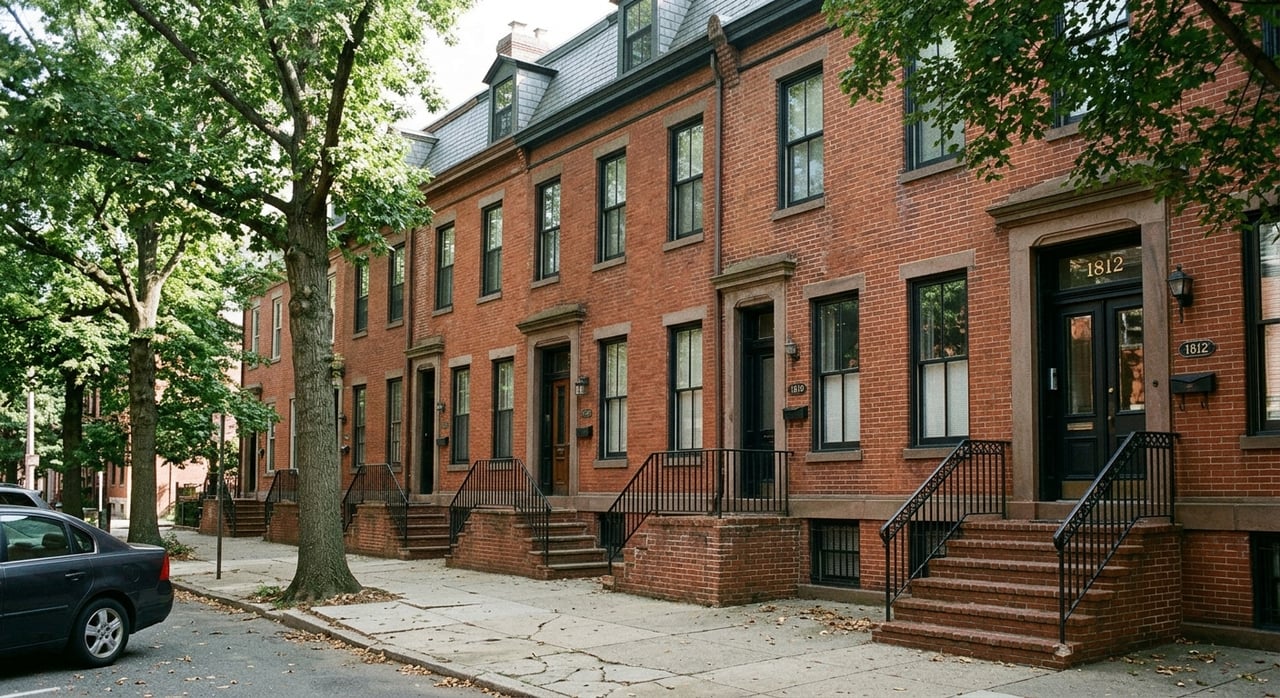
Clinton Hill remains closely tied to Brooklyn’s classic rowhouse character. According to New York City Planning, the neighborhood includes a strong mix of three- to five-story brownstone row houses, along with one- and two-family homes, apartment buildings, mansions, and older wood-frame homes in Wallabout.
That matters if you are starting your search now. Clinton Hill is still very much a brownstone neighborhood, but it is not a one-product market. You may be looking at anything from a compact townhouse to a legal small multi-family building, and those differences can change both price and financing options.
The area is also well connected. The broader community board information notes access to the A, C, and G trains along with multiple bus lines, which helps explain why the neighborhood continues to attract buyers who want a historic housing stock with practical transit access. You can review the area context through the Brooklyn community board page.
What Prices Look Like Now
One of the biggest mistakes buyers make is assuming every Clinton Hill brownstone trades at the same price level. Current neighborhood-wide pricing sits around the $1.0 million to $1.1 million range, but that number can be misleading if you are specifically shopping for a townhouse or brownstone.
As of April 12, 2026, StreetEasy’s Clinton Hill market page showed 74 listings for sale with a median asking price of $1,075,000 and a median size of 1,100 square feet. The same research set also points to other neighborhood indicators near that range, including a February 2026 median listing price of $1,047,499 and a February 2026 median sale price of $1.0 million.
But brownstones and townhouses often sit above that median. StreetEasy examples in the research included a townhouse at 1039 Fulton Street asking $1,899,000 and a multi-family home at 300 Lafayette Avenue asking $3,499,000. In other words, the neighborhood median may reflect a wide mix of property types, while classic brownstones can command a very different number.
Why Brownstone Pricing Varies So Much
In Clinton Hill, the details matter. Price can shift significantly based on lot width, square footage, building condition, layout, and whether the property is configured as a single-family, duplex, or small multi-family.
This is especially important for emerging buyers because townhouse data can be thin from month to month. The research report notes that house-sale data may not always be statistically significant, which means comps can feel noisy and less predictable than in a condo-heavy market. That is one reason buyers need to evaluate each building on its own merits rather than rely on a single neighborhood headline number.
A Brownstone May Be Realistic With the Right Structure
For many emerging buyers, the key question is not simply, “Can I buy in Clinton Hill?” It is, “What type of Clinton Hill property gives me the best path to ownership?”
The answer often starts with financing limits. In 2026, the FHFA conforming loan limit announcement shows a baseline one-unit conforming loan limit of $832,750, with high-cost area ceilings reaching $1,249,125 for a one-unit property in Kings County. The same published limits rise for two-, three-, and four-unit properties.
That creates a practical planning opportunity. A legal two-, three-, or four-unit property may fit financing rules differently than a similar-looking one-family townhouse at the same price. For some buyers, an owner-occupied duplex or small multi-family property can be more realistic than a classic single-family brownstone.
Financing Paths to Understand First
Before you fall in love with a facade or stoop, it helps to understand the financing framework that may shape your search.
Conforming financing in Kings County
For eligible buyers, standard conforming financing can still work in this market if the purchase price and unit count fit within county limits. According to the 2026 FHFA loan limit release, high-cost area ceilings reach:
- $1,249,125 for one unit
- $1,599,375 for two units
- $1,933,200 for three units
- $2,402,625 for four units
If the price rises above those thresholds, you may need jumbo financing or a larger down payment. That is why matching the property type to the financing structure early can save you time and frustration.
FHA may still matter
FHA financing is still relevant for many emerging buyers. The Consumer Financial Protection Bureau’s FHA overview explains that FHA loans can allow down payments as low as 3.5% for eligible borrowers.
In a high-cost county, that can make a meaningful difference. If you are open to a smaller property, or an owner-occupied building that fits FHA and local loan limits, FHA may offer a more accessible entry point than many buyers assume.
Unit count can change the math
This is one of the most important takeaways for Clinton Hill buyers. According to the HUD 2026 FHA high-cost area limits, loan ceilings increase as legal unit count increases.
That does not mean every multi-family deal is easier. It does mean a legal two- to four-unit property may open financing possibilities that a one-family building does not. If you are an emerging buyer trying to break into the brownstone market, this is often where strategy matters most.
Older Buildings Need Older-Building Due Diligence
Clinton Hill’s housing stock is part of its appeal, but age and character come with responsibilities. If you are comparing a brownstone to a newer condo, the due diligence process should be very different.
Based on the age and building mix described by City Planning, common budget items may include roof work, water intrusion, masonry and brownstone facade repairs, stoop and ironwork maintenance, and older electrical, plumbing, or mechanical systems. You may also need to review prior alterations and permits carefully.
For buyers, this usually means planning for more than just the contract price. You want room in your budget for inspections, repairs, and a healthy contingency in case hidden work appears once a project begins.
Historic District Rules Matter
Clinton Hill’s historic-district context is part of what makes the neighborhood special. The area was designated in 1981, and City Planning describes it as a preserved brownstone setting with notable Neo-Grec, Gothic Revival, and Italianate brick and brownstone rowhouses.
If a property is landmarked or located within the historic district, exterior work often requires review. The Landmarks Preservation Commission states that most exterior alterations, demolition, or new construction need advance approval, while ordinary exterior repairs and most interior-only work generally do not require LPC review.
That is not a reason to avoid these properties. It is simply something to respect and plan around. Landmark status does not freeze a building, but it does affect how changes are made.
Budget for Time, Not Just Money
One of the smartest ways to approach a Clinton Hill brownstone purchase is to think in two budgets at once. The first is your money budget. The second is your time budget.
If you plan to update a historic property, you may need both construction contingency and approval time, especially for exterior work. In practice, the question is often less about whether changes are possible and more about which changes are feasible, what approvals are needed, and how much hidden work might surface during renovation.
A Practical Buying Strategy for Emerging Buyers
If you are trying to make Clinton Hill work, a simple strategy can help you focus.
Start with financing, not finishes
Begin with your likely loan structure and comfortable monthly payment. Then narrow your search by legal unit count and target price range before you get attached to a certain design style or renovation vision.
Be flexible on property type
A single-family townhouse may be your ideal end goal, but an owner-occupied duplex or small multi-family building may be the more realistic first step. In Clinton Hill, flexibility can create options.
Underwrite renovation honestly
Do not assume cosmetic updates are the full story in an older building. Budget for systems, facade issues, permit review, and the possibility that work may take longer than expected.
Treat each listing as its own case
Because the brownstone market is not a single price point, broad averages only go so far. A narrow house in dated condition is not the same purchase as a wider renovated multi-family building, even if both sit under the same neighborhood label.
If you want help evaluating what is actually realistic in Clinton Hill, Ronit Abraham offers neighborhood-savvy guidance grounded in Brooklyn brownstone and multi-family experience. Whether you are weighing property type, financing fit, or the realities of an older building, a clear strategy can help you move forward with confidence.
FAQs
Is a Clinton Hill brownstone realistic for an emerging buyer?
- Sometimes, yes. Current research suggests it is often more realistic if you target a smaller footprint, an owner-occupied duplex, or a small multi-family property that aligns with local financing limits.
What is the current price range for Clinton Hill homes?
- Neighborhood-wide indicators in the research cluster around roughly $1.0 million to $1.1 million, but brownstones and townhouses can list much higher depending on size, condition, and configuration.
Do Clinton Hill historic district rules affect renovations?
- Yes. For landmarked properties or homes within the historic district, most exterior alterations, demolition, or new construction require advance approval from the Landmarks Preservation Commission.
Why does unit count matter when buying in Clinton Hill?
- Unit count matters because conforming and FHA high-cost loan limits rise for two-, three-, and four-unit properties, which can make some multi-family purchases more financeable than a one-family building at a similar price.
What should buyers inspect closely in an older Clinton Hill brownstone?
- Buyers should pay close attention to roof condition, water intrusion, masonry or facade issues, stoop and ironwork maintenance, older electrical and plumbing systems, mechanicals, and records of prior alterations or permits.