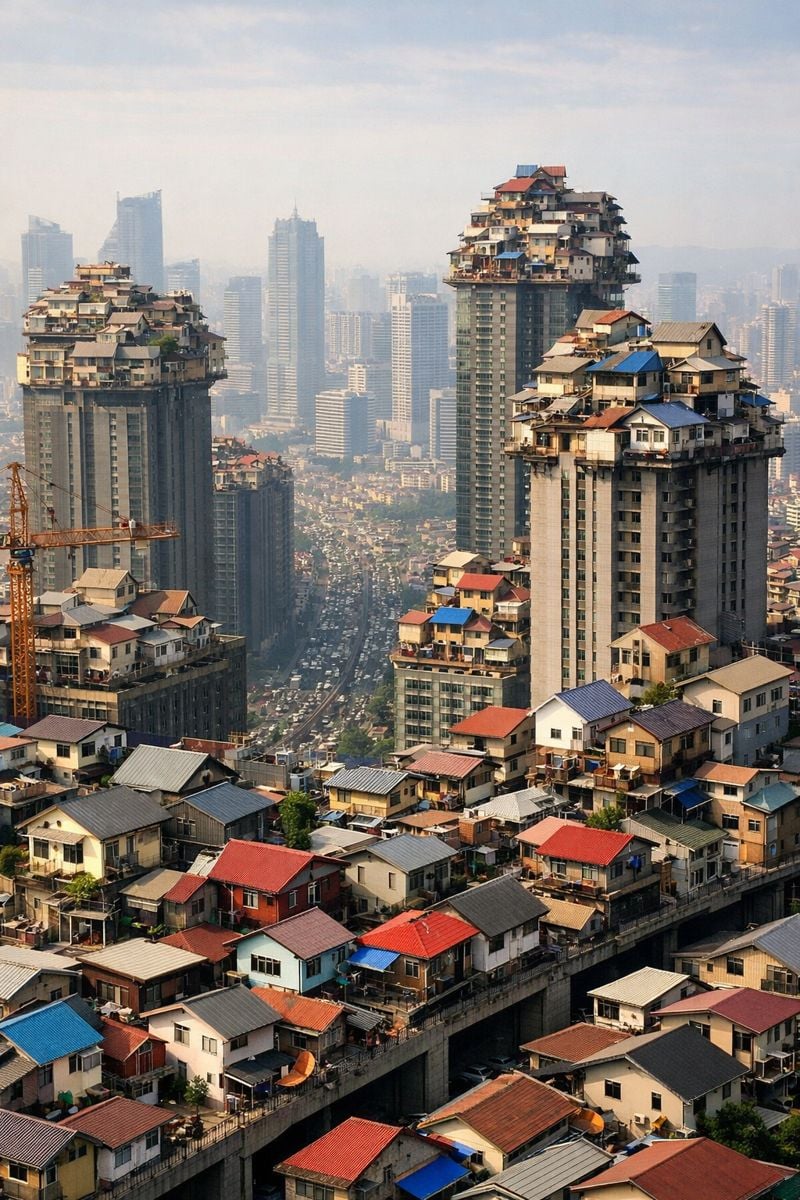
Are We Running Out of Space?
Around the world, housing costs have risen so dramatically that many people can no longer afford to live in the places they once called home. A major driver of this issue—beyond wages failing to keep pace with rising costs—is perceived scarcity. Yet the reality is more nuanced.
Walking through Manhattan, it is hard not to notice the tiny buildings wedged between tall towers and even large, open lots scattered throughout the city. In places like Manhattan and Palm Beach, geographic limitations create the impression of extreme scarcity, since both are surrounded largely by water. But often it is simply intense demand for ultra prime areas that fuels the belief that space has run out.
In Manhattan alone, the Municipal Art Society estimates there are 1.8 billion square feet of unused development rights in residential zones. That is enough to build approximately 1.5 million apartments at 1,200 square feet each. Meanwhile, roughly 95 percent of the United States—about 1.9 billion acres is open, unbuilt land. The challenge, of course, is that much of that land is in places where many people do not want to live.
Zoning adds another layer. Single family homes that require large minimum lot sizes restrict how many homes can be built. Although some regions are revising zoning to allow greater density, the desire for a single family home with a yard remains incredibly strong. Many first time buyers have no interest in attached housing or apartments. This raises a difficult question:
Should areas with one acre minimum lot requirements adjust to meet broader housing needs?
And if they do, does that risk devaluing existing properties?
Around the world, entirely new towns are being planned to address housing shortages, expanding outward into areas where land is available. Technological shifts may also reshape the equation. If self driving cars eventually become mobile living rooms or offices, will long commutes feel less burdensome?
Living far from urban job centers may be more affordable—until you factor in the cost of time, stress and lost productivity from extended travel. Meanwhile, communities with extremely restrictive zoning and limited development opportunities in prime locations have the potential for the strongest long term value appreciation, particularly as new wealth is created and an estimated $120 trillion in generational wealth transfers to younger generations.
Limited zoning may suppress affordability, but paradoxically, it can also be one of the most powerful drivers of property value growth. Whether you’re navigating density debates, evaluating long term value or exploring where growth is headed next, I can help you understand how zoning, scarcity and demand shape real estate opportunities.
Brookings Institution: Zoning and Housing Affordability
https://www.brookings.edu