If you have ever wondered whether Brooklyn Heights townhouses still sit at the top of Brooklyn’s brownstone market, the short answer is yes, with an important caveat. The prestige is not just about price. It comes from a rare mix of historic architecture, strong preservation, everyday livability, and steady buyer demand. If you are weighing a purchase, planning a sale, or thinking about a long-held family property, this is where the details matter. Let’s dive in.
Why Brooklyn Heights Still Stands Out
Brooklyn Heights continues to hold a special place in Brooklyn real estate because its historic identity is both deep and protected. The city describes it as New York City’s first neighborhood designated as a historic district, with designation by the Landmarks Preservation Commission in 1965, and the National Park Service recognizes the Brooklyn Heights Historic District as a National Historic Landmark district.
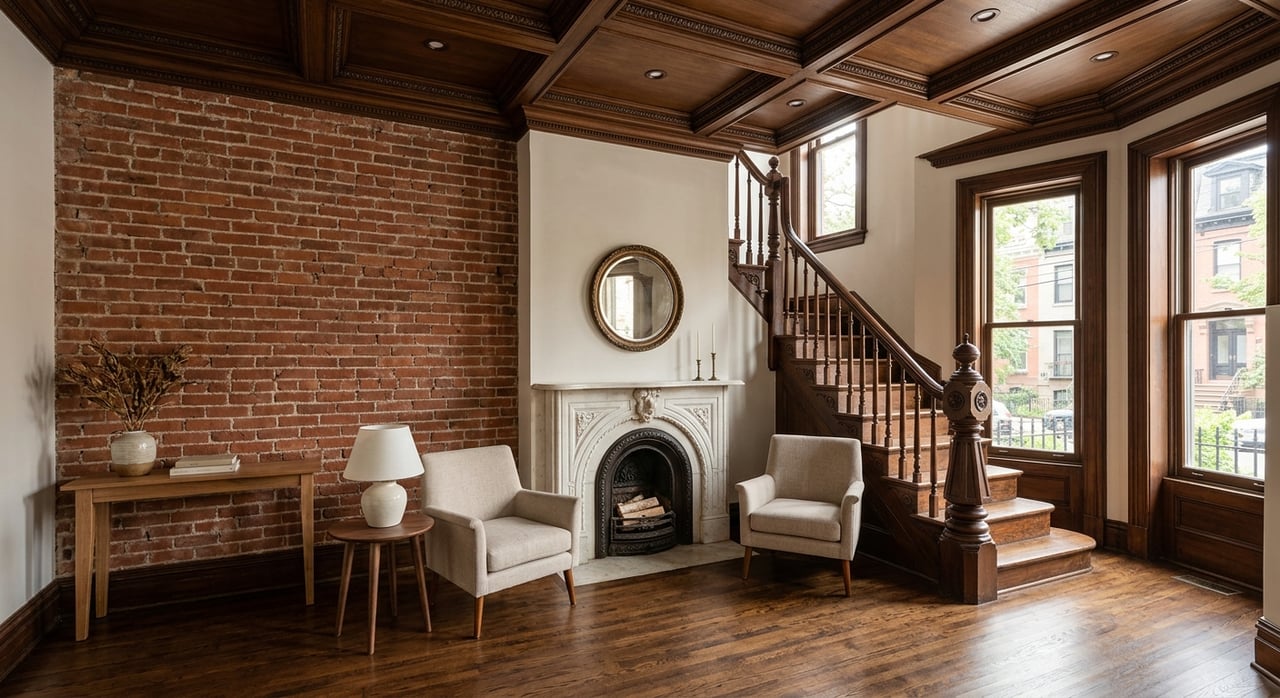
That designation is not just symbolic. The original Landmarks Preservation Commission report describes a largely residential district with many 19th-century buildings, including at least 684 pre-Civil War structures. It also notes the concentration of Federal, Greek Revival, Gothic Revival, and Italianate architecture, which helps explain why the neighborhood still feels so architecturally layered and intact.
For many buyers and owners, that preserved character is the real benchmark. In a market where townhouse value often depends on both beauty and scarcity, Brooklyn Heights offers a level of historic consistency that is hard to replicate.
What “Gold Standard” Really Means
When people call Brooklyn Heights the gold standard, they usually mean more than one thing. They are talking about architecture, location, lifestyle, and long-term desirability all at once.
In practical terms, Brooklyn Heights remains a top-tier townhouse market because it combines:
- Landmark-protected historic streetscapes
- Proximity to the waterfront
- Quick access to Manhattan
- A compact daily lifestyle with shopping, parks, and transit close by
- A premium resale position within Brooklyn’s townhouse market
That does not mean every townhouse here is automatically superior to one in Park Slope or Carroll Gardens. It means Brooklyn Heights still tends to be the neighborhood that other brownstone markets are measured against.
Historic Character Sets the Tone
One reason Brooklyn Heights continues to command attention is that it feels older and more formally preserved than many nearby townhouse neighborhoods. According to the city’s preservation materials, the district retained block after block of a 19th-century urban community, which is a big part of its lasting appeal.
Compared with nearby brownstone districts, Brooklyn Heights also presents a broader architectural mix. A city overview of historic districts notes that Park Slope’s historic district is known for row houses and flats buildings from the mid-19th through early 20th centuries, while Carroll Gardens is closely associated with brownstone-fronted row houses and deep front yards. Brooklyn Heights, by contrast, often reads as earlier and more stylistically varied.
For buyers, that means townhouse inventory here can feel more distinctive. For sellers, it supports the case that a well-positioned Brooklyn Heights townhouse competes in a rarefied category.
Daily Life Adds Real Value
Prestige alone does not keep a market strong. People still need a neighborhood that works well day to day, and Brooklyn Heights has that in a way few historic districts do.
A major part of the appeal is Brooklyn Bridge Park, an 85-acre waterfront park that is free to enter and open daily from 6 a.m. to 1 a.m. The neighborhood also benefits from the Brooklyn Heights Promenade, which remains one of its defining public spaces and one of the most recognizable view corridors in Brooklyn.
On top of that, the neighborhood offers a practical mix of shopping, dining, and transit. PropertyShark notes that Montague Street and Court Street continue to serve as core retail corridors, while the Brooklyn Borough Hall Greenmarket operates year-round on Tuesdays, Thursdays, and Saturdays. The same market overview highlights access through Court Street, High Street, and Clark Street, with additional connections via the 4, 5, and F lines, making Lower Manhattan especially close in commute terms.
That combination matters. You get a residential setting that feels calmer than many busy Brooklyn corridors, while still staying connected to work, errands, and public space.
Schools Support Long-Term Demand
For many townhouse buyers, schools are part of the decision even if they are not the only factor. Brooklyn Heights benefits from a dense educational landscape in a compact area, which reinforces its long-term appeal.
The neighborhood’s public elementary option is The Emily Warren Roebling School, K008, located at 37 Hicks Street in District 13. There is also a neighborhood preschool option at 182 Henry Street, according to NYC Public Schools.
Brooklyn Heights also has nearby independent school options. The Packer Collegiate Institute states that it has been part of Brooklyn Heights since 1845, serves more than 1,000 students, and is located at 170 Joralemon Street. Brooklyn Friends School lists campuses at 375 Pearl Street and 116 Lawrence Street in Brooklyn.
The key point is not to rank one school against another. It is that Brooklyn Heights offers a concentrated school ecosystem within a walkable area, which helps sustain interest from buyers looking for a townhouse that can work for the long term.
How the Market Is Performing
If the question is whether Brooklyn Heights still deserves its premium reputation, recent sales data suggest it does. At the same time, townhouse data should always be read carefully because the number of transactions in any given month can be small.
PropertyShark reported that in January 2026, Brooklyn Heights had a median sale price of $1.4 million across all property types, with 22 transactions and a median price per square foot of $1,673. In that same snapshot, houses posted a $5.0 million median, condos a $3.0 million median, and co-ops a $1.0 million median, according to PropertyShark’s Brooklyn Heights market trends.
That house median stands out, but sample size matters. The same report showed that Park Slope and Carroll Gardens also posted strong house medians in January, but with only one house transaction in Park Slope and two in Carroll Gardens. In a thin market, monthly medians can move sharply based on a small number of closings.
A broader read points in the same direction. Leslie Garfield’s Brooklyn Q3 2025 townhouse report said Brooklyn Heights led Brooklyn with an average townhouse sale price of $8.23 million, up more than 10 percent year over year despite fewer transactions. While that is a brokerage report and should be treated as a market interpretation rather than a neutral dataset, it still supports the view that Brooklyn Heights remains in the top tier.
There is also a wider Brooklyn trend behind this. Brownstoner’s coverage of Miller Samuel and Douglas Elliman data reported that Brooklyn townhouse median prices rose 18.2 percent in Q4 2024, with northwest Brooklyn townhouse prices posting the largest jump at 25.8 percent from 2023 to 2024. That broader resilience helps explain why premium brownstone neighborhoods have held their value so well.
Brooklyn Heights vs. Park Slope and Carroll Gardens
If you are choosing between Brooklyn townhouse neighborhoods, the answer often comes down to priorities rather than a universal winner. Brooklyn Heights still looks like the gold standard, but each market offers something a little different.
Brooklyn Heights
Brooklyn Heights stands out for preserved historic fabric, waterfront access, Manhattan proximity, and a durable prestige factor. It tends to attract buyers who want architectural pedigree and are willing to pay for it.
Park Slope
Park Slope offers a broad and well-known brownstone market with its own strong demand. Based on the historic district overview cited above, it is defined by a large collection of row houses and flats buildings from the mid-19th through early 20th centuries, often giving buyers more breadth of inventory and a more uniformly residential feel.
Carroll Gardens
Carroll Gardens is known for its intimate scale and its distinct brownstone-fronted row houses with deep front yards. That physical character creates a different kind of appeal, one that can feel more garden-oriented and tucked in.
In other words, Brooklyn Heights is not the only elite townhouse market in Brooklyn. But if your definition of “gold standard” includes history, setting, preservation, and premium positioning, it still has a strong claim.
What This Means for Buyers
If you are buying in Brooklyn Heights, you are often paying for more than square footage. You are also paying for location, protected architecture, and a neighborhood identity that has remained unusually consistent over time.
That can be a smart move if your goal is long-term hold value, daily convenience, and a townhouse setting that feels hard to duplicate. It also means you should evaluate each property carefully, because in a landmarked area, condition, layout, updates, and legal constraints around alterations can all affect value.
What This Means for Sellers
If you own a Brooklyn Heights townhouse, the neighborhood’s reputation still gives you an edge, but presentation and pricing still matter. Buyers at this level tend to be discerning, and they will compare architecture, condition, outdoor space, and block quality closely.
That is especially important for legacy properties, inherited homes, or townhouses that need coordination before hitting the market. A strong result often depends on thoughtful preparation, vendor management, and a pricing strategy grounded in recent comparable sales rather than headline numbers alone.
If you are thinking about selling a townhouse in Brooklyn Heights, or evaluating a family property with estate or fiduciary considerations, Ronit Abraham offers neighborhood-focused guidance with the hands-on coordination and technical care these properties often require.
FAQs
Are Brooklyn Heights townhouses still considered the top brownstone homes in Brooklyn?
- Based on the historic preservation, waterfront location, Manhattan access, and premium resale data in the sources above, Brooklyn Heights still has one of the strongest claims to being Brooklyn’s gold-standard townhouse market.
How does Brooklyn Heights compare with Park Slope townhouses?
- Brooklyn Heights often stands out for earlier architecture, stronger historic identity, and waterfront adjacency, while Park Slope is known for a broad brownstone market and a more uniformly residential historic district.
How does Brooklyn Heights compare with Carroll Gardens townhouses?
- Brooklyn Heights tends to offer more formal historic prestige and closer Manhattan access, while Carroll Gardens is known for its intimate scale and brownstone homes with deep front yards.
Are Brooklyn Heights townhouse prices still strong?
- Recent reports cited above show that Brooklyn Heights remains a premium townhouse submarket, though monthly house medians should be read carefully because transaction counts can be small.
What makes Brooklyn Heights attractive for long-term townhouse buyers?
- The neighborhood combines preserved 19th-century architecture, nearby schools, retail corridors, transit access, Brooklyn Bridge Park, and the Promenade within a compact, walkable setting.
What should sellers know before listing a Brooklyn Heights townhouse?
- Sellers should focus on accurate pricing, strong preparation, and property-specific strategy, especially because buyers in this segment pay close attention to condition, layout, architectural detail, and location within the neighborhood.