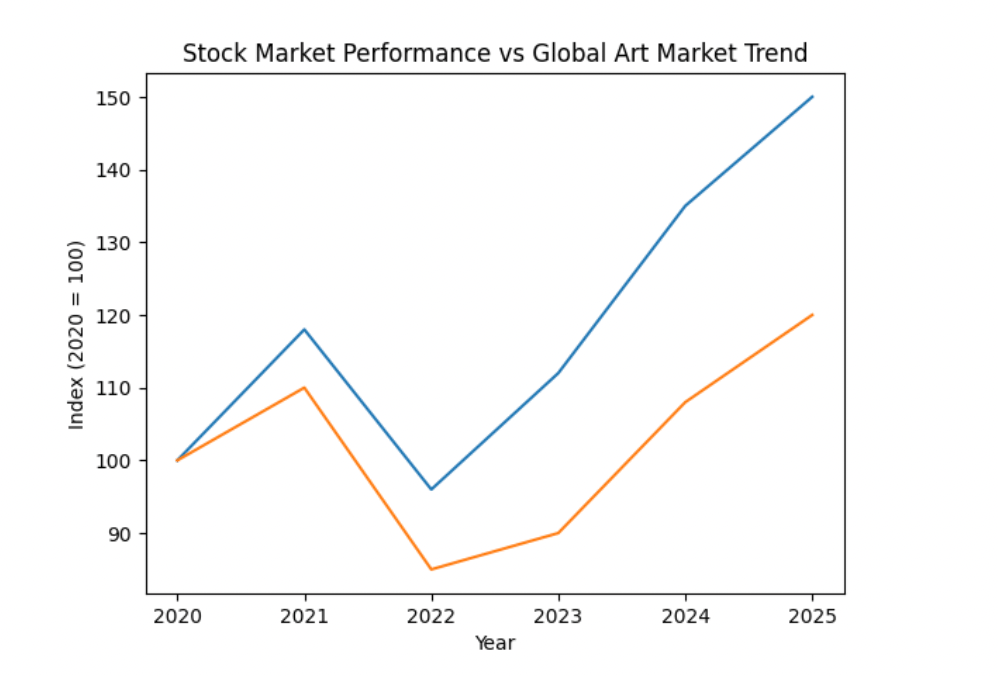
After nearly three years of contraction, the global art market is showing renewed strength. While no single factor fully explains this turnaround, data and market behavior point to a combination of rising wealth, stronger stock market performance and improved liquidity conditions as key drivers.
Art Market Cycles and Recent Performance
According to the Art Basel & UBS Global Art Market Report, the global art market contracted in value through much of 2022–2023 amid tighter financial conditions and subdued buyer confidence. Auction volumes fell and many galleries reported weaker sales. That trend aligned with higher interest rates, slowing economic growth, and lower consumer confidence across luxury sectors.
In 2024 and into 2025, the market began to stabilize and then expand again. Preliminary data from major auction houses showed increases in both auction sell-through rates and total sales volume at high-end events, particularly in contemporary and post-war segments.
Wealth Creation and Stock Market Gains
One of the most significant supporting forces behind the rebound is the growth of personal wealth among affluent buyers. Equity markets have exhibited strong performance in recent years. For example:
-
The S&P 500 delivered double-digit returns in multiple consecutive years through 2023–2025.
-
The Dow Jones Industrial Average climbed from around 33,000 in early 2021 to near 48,000 by 2025.
This wealth effect matters because many art buyers allocate discretionary capital based on broader portfolio strength. When household balance sheets expand, buyers are more likely to commit to high-ticket purchases in categories such as art, rare collectibles and luxury real estate.
Interest Rates and Liquidity Conditions
Lower interest rates reduce the carrying cost of capital and increase liquidity for buyers and investors. Although central banks have tightened at times to battle inflation, recent rate adjustments and forward guidance signaling slower or lower rate paths have improved borrowing conditions. That dynamic can increase confidence among wealthy buyers who might otherwise delay purchases.
Art, especially at the top end, is often financed through lines of credit secured by existing assets. Lower borrowing costs make these strategies more attractive, which can stimulate higher transaction volumes.
Geopolitics, Tariffs and Ongoing Risk
Despite renewed demand, uncertainty remains. Trade tensions, tariffs on luxury goods and geopolitical risk continue to create headwinds in some regions. Despite these risks, buyers with strong balance sheets have been less deterred. When wealth rises faster than headline risks feel threatening, discretionary demand rebounds more quickly than it did in previous cycles.
Art Market as a Signal of Luxury Demand
Analyzing art market behavior offers insight into broader luxury consumption trends. A rebound in art sales often coincides with increased activity in related markets:
-
Luxury real estate has shown resilience in ultra-prime segments.
-
Rare collectibles such as vintage cars and rare watches have seen expanding auction results.
-
Private sales channels have grown as high-net-worth buyers seek discretion alongside value.
The art market can act as a leading indicator for high-end asset demand because buyers in this space are often the same individuals transacting in other luxury categories.
What This Means for Real Estate and Other Assets
For real estate professionals and investors, the art market rebound offers context about sentiment among affluent buyers. When discretionary spending on non-essential assets increases, it often signals confidence among top tier buyers. That confidence frequently translates into higher demand for luxury homes, trophy properties and bespoke real estate opportunities.
Strong performance in equity markets and rising wealth support activity across these markets. Understanding how these forces interact can help you anticipate shifts in buyer behavior and position offerings to match evolving demand. If you’re tracking how shifting wealth and luxury market trends impact high-end real estate demand, I can help you interpret the signals and adjust your strategy for today’s market conditions.