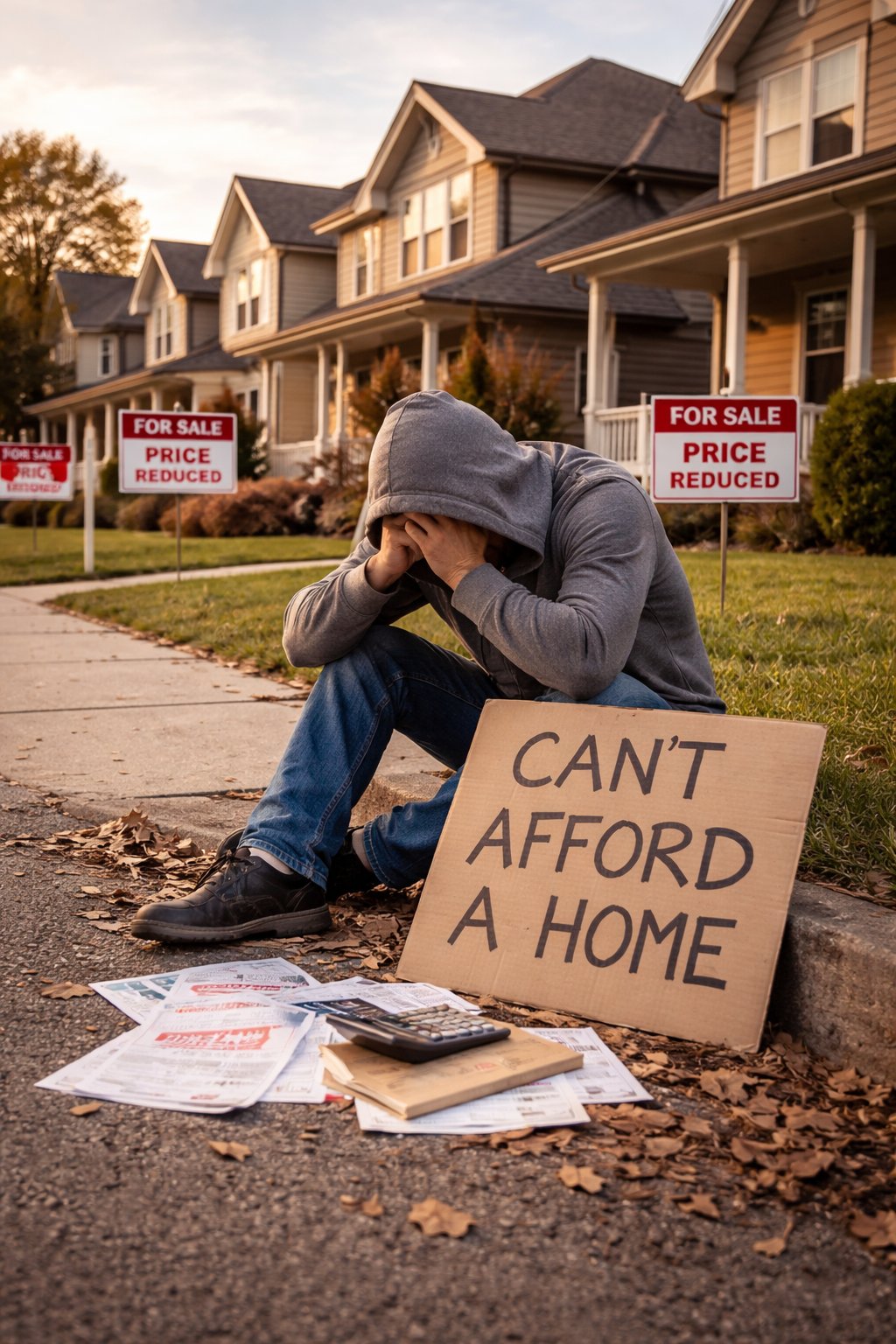
Housing affordability is discussed constantly, but rarely quantified. When you run the numbers, the path back to pre-Covid affordability is far steeper than most people realize.
According to recent analysis, one of three things would need to happen to restore homebuyer affordability to pre-Covid levels. Not all three. Just one. And none are simple.
Option One: Wages Rise Dramatically
To offset today’s housing costs, median household wages would need to increase by roughly 56%, lifting the median income to about $132,000 per year.
That kind of wage growth does not happen quickly, evenly, or without inflationary consequences. Even in strong labor markets, wage gains tend to be incremental and unevenly distributed across industries and regions.
Option Two: Mortgage Rates Fall Sharply
Affordability could also improve if the 30-year mortgage rate fell by approximately 2.65%, assuming home prices did not rise in response.
That assumption matters. Historically, lower rates tend to stimulate demand, which often pushes prices higher, partially or fully offsetting the benefit. Rates alone rarely solve affordability unless supply expands at the same time.
Option Three: Home Prices Decline Significantly
The third path is a 35% decline in home prices.
That level of price correction would likely require a severe economic shock, widespread distress, or forced selling. It would also impact existing homeowners, local tax bases, lending markets, and broader economic stability.
Price declines of that magnitude are possible, but they rarely arrive without collateral damage.
Why This Matters
Affordability conversations often assume a smooth adjustment back to “normal.” The reality is that restoring affordability requires extreme movement in at least one major variable.
More commonly, affordability improves slowly through a combination of:
-
Modest wage growth
-
Gradual rate adjustments
-
Flat or slower-growing home prices
-
Creative financing and ownership strategies
None of these make headlines, but together they shape real outcomes.
The Real Constraint
The underlying issue remains supply. Without materially increasing the number of homes in high-demand areas, improvements in wages or rates tend to get absorbed by higher prices.
Affordability is not broken because of one variable. It’s strained because multiple forces are misaligned.
The Bottom Line
There is no painless reset button for housing affordability. The math makes that clear.
Understanding these trade-offs matters for buyers, sellers, and policymakers alike. Decisions made today need to be grounded in realism, not nostalgia for a market that no longer exists. If you’re trying to evaluate affordability realistically, whether buying now, waiting, or adjusting strategy, I can help you work through the numbers in context, not headlines.