The McMansion didn’t disappear. It rebranded.
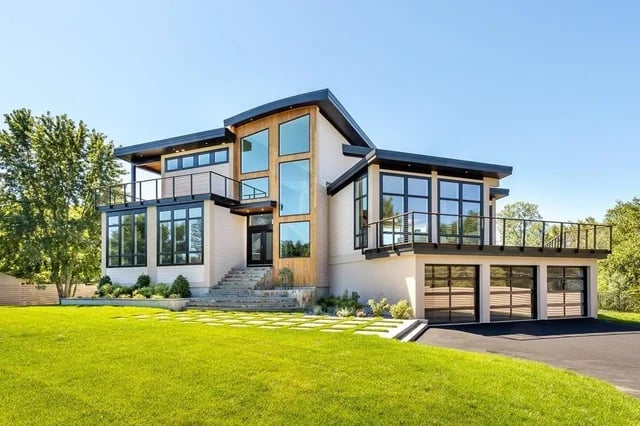
Enter the McModern: the latest evolution of oversized residential design. Think sprawling footprints, flat roofs, perpendicular white walls, vast sheets of glass and dramatic cantilevered platforms, often perched above a view. It looks sleek, expensive and “architectural” at first glance. But much like the McMansion before it, the McModern often borrows the aesthetic of good design without fully understanding its purpose.
What Defines a McModern
The McModern pulls from legitimate modernist architecture, but applies it at scale, and often without restraint. Common traits include:
-
Flat or minimally pitched roofs
-
Monochrome white or gray façades
-
Floor-to-ceiling glass walls
-
Oversized volumes and exaggerated massing
-
Visual drama prioritized over livability
These homes photograph beautifully and dominate listing feeds. But design is not just about how something looks, it’s about how it works.
Where It Goes Wrong
True modern architecture is rooted in proportion, material honesty, site sensitivity and intentional restraint. The McModern frequently skips those steps.
Instead of responding to its surroundings, it overwhelms them. Instead of thoughtful spatial flow, it delivers scale for scale’s sake. Instead of timelessness, it often locks itself into a very specific moment in trend culture.
Like the McMansion, the McModern is usually developer-driven, value-engineered and optimized for maximum square footage rather than long-term livability or resale nuance.
Why This Matters in Real Estate
Design trends impact value, but not always in the way sellers expect.
Homes that chase aesthetics without architectural discipline can age quickly. What feels cutting-edge today may feel dated tomorrow, especially when newer iterations push the look even further. Buyers become more discerning over time, and resale markets tend to reward homes with genuine design integrity rather than surface-level style.
In contrast, modern homes that are well-sited, thoughtfully scaled and materially grounded tend to hold value better, even as tastes evolve.
The Bigger Pattern
The McModern reflects a broader trend in housing: speed over substance. Faster builds, bigger homes, louder visuals. It’s familiar because it mirrors how trends move everywhere else now, quickly amplified, widely copied, and often diluted.
The result is a housing stock that looks impressive but may not age gracefully.If you’re buying or selling a modern home, especially one that leans heavily into current design trends, it’s worth understanding whether the architecture supports long-term value or just short-term appeal. I’m happy to help evaluate that distinction before it shows up in pricing or market time.