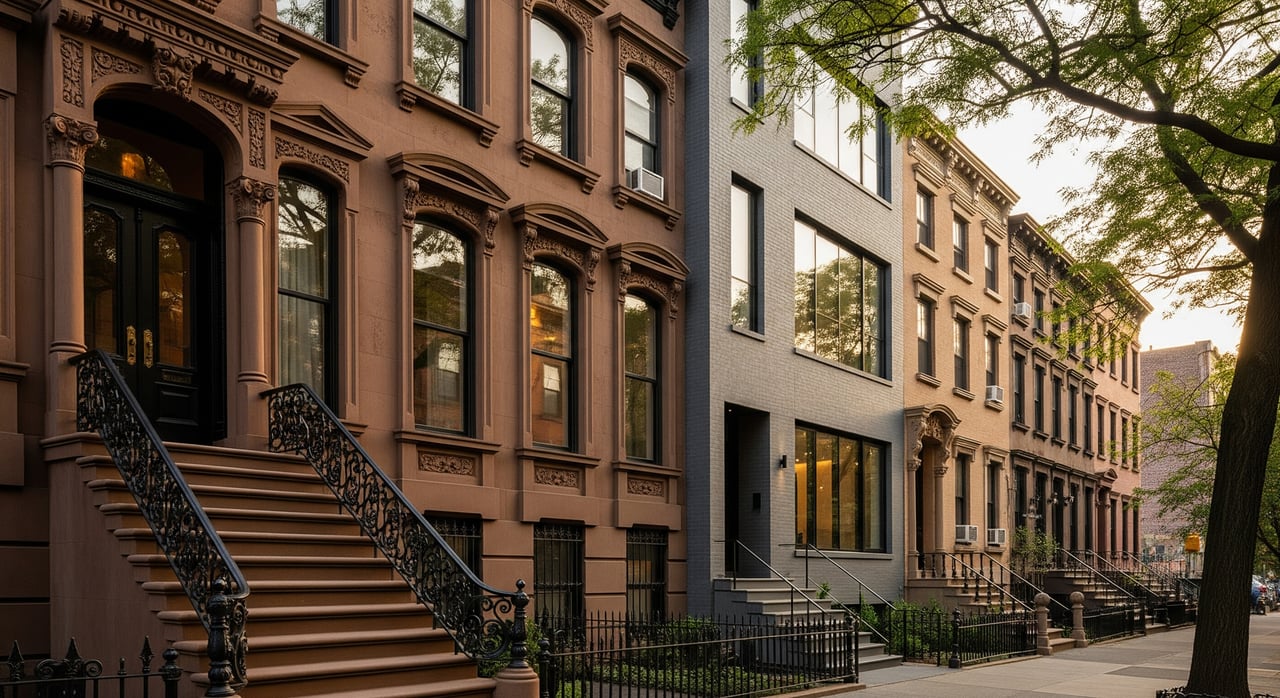
Thinking about a classic Bed-Stuy brownstone but also seeing listings called townhouses? You are not alone. The terms get used loosely, and the differences can affect your budget, renovation plans, financing, and resale. This guide breaks down what each term means in Bedford-Stuyvesant, what to check before you buy, and how to match the right house type to your goals. Let’s dive in.
Brownstone vs. townhouse basics
What makes a brownstone
A brownstone is a historic rowhouse, usually from the 19th century, with a facade clad in brown sandstone or finished to look like it. In Bed-Stuy, you often see raised stoops, a parlor floor with high ceilings, carved cornices, and brownstone lintels. Many show Italianate, Neo-Grec, Renaissance Revival, Queen Anne, or Greek Revival styles.
What a townhouse means
“Townhouse” is a broad term. It simply describes an attached, multi-story home that shares walls with neighbors. It may be single-family or small multi-family. Materials vary from brick to limestone to brownstone, and age ranges from 19th-century to newer infill.
Why the words matter less than legal status
Not every townhouse is brownstone-clad, and some brownstone-clad homes are not landmarked. Marketing often blurs the terms. Focus on the property’s legal use, facade material, and whether it sits in a historic district. That will shape maintenance, permits, and renovation timelines.
Facade and structure: maintenance realities
Brownstone masonry care
Original brownstone is softer and more porous than brick or limestone. Over time, you may see erosion, spalling, or cracked sills and steps. Restoration can be complex and often calls for specialists. Exposure, prior repairs, and water management affect how often you will need work.
Structural and exterior checkpoints
Older rowhouses can show foundation cracks, bowing party walls, or sagging cornices and lintels. Sidewalk upkeep is typically the owner’s responsibility, and curb or sidewalk work can require city permits. Plan for periodic roof, facade, and cornice attention.
Historic district review and permits
If the house is in a landmarked area, visible exterior work, including stoop, cornice, and window changes, often requires Landmarks Preservation Commission review. Expect longer lead times and detailed specifications. Work with contractors who know LPC processes and appropriate materials.
Systems and comfort in older homes
Plumbing and electrical
Many Bed-Stuy rowhouses still have aging supply or drain lines and sometimes legacy electrical like knob-and-tube or undersized service. Modernizing for today’s loads usually means permitted upgrades and inspections.
Heating and cooling
Boilers with radiators are common. Adding central air or high-efficiency HVAC requires space planning, penetrations, and Department of Buildings permits. Coordinate mechanical runs with structural needs to avoid damaging historic features.
Basements and moisture
Basements in historic homes often face moisture or occasional flooding. Waterproofing, drainage, and proper ventilation are key. If you plan to finish or rent the space, verify legal egress and ceiling heights to meet code.
Layouts and everyday living
Typical Bed-Stuy floor plans
Expect a raised stoop, a parlor floor living and dining area, and bedrooms on the upper stories. Kitchens may be on the garden level or at the rear of the parlor if renovated. Lots are often narrow, with small rear yards. Some homes have modest attic rooms.
Stairs and accessibility
Multi-story stairs add daily exercise and charm but can be a barrier. If you need flexible living, consider layouts with a bedroom on the parlor or garden level, or plan for a stair lift. Elevators are possible but usually costly and space-constrained.
Legal use, units, and rentals
Certificate of Occupancy matters
Always confirm the legal unit count and use on the Certificate of Occupancy. Townhouses in Bed-Stuy can be single-family or 2–4 units. The legal setup affects financing, insurance, taxes, and what you can change.
Garden and basement apartments
Basement or garden-level apartments are common. To be a legal, habitable unit, the space must meet egress, ceiling height, light, and ventilation standards. Many “informal” apartments exist; verify legality and check for violations before you buy.
Tenant status and regulation
New York has strong tenant protections. If units are occupied, confirm whether any tenants are rent-regulated and review rent history. Tenant status affects valuation, renovation plans, and timelines.
Renovation scope and planning
Structural limits and open plans
Load-bearing walls and narrow lot widths limit large open-plan changes without significant structural work like beams or posts. Choose an architect with deep rowhouse experience to balance flow with structural needs.
Mechanical upgrades and finishes
Installing new plumbing, electrical, or HVAC often requires opening walls and ceilings. Coordinate sequencing to protect historic details and control costs. In historic districts, exterior-visible equipment and finishes may need approvals.
Financing and taxes in Bed-Stuy
Single-family vs. 2–4 family loans
Single-family homes typically qualify for conventional loans. Owner-occupied 2–4 unit properties may require different down payments, reserves, and underwriting standards. FHA options can apply up to 4 units if the property meets condition rules.
Investment property financing
Investor loans usually come with higher rates and down payments. Lenders will review rental income, leases, and the building’s condition closely.
Tax class and assessments
In New York City, tax class and assessed value drive annual taxes. Most 1–3 family homes fall under Class 1 with different rate structures than larger multi-family. Renovations that increase assessed value can raise future taxes. Review the current tax bill and understand how planned work may affect assessments.
Resale value drivers and risk
Block-level factors
In Bed-Stuy, value is highly block-specific. Landmarked, contiguous brownstone blocks and proximity to transit and retail corridors often command a premium and can shorten market time. A well-maintained facade and intact historic details help.
Documentation and condition
Buyers discount for deferred facade, roof, or structural work. Sellers who completed major systems upgrades and can document permitted work tend to achieve stronger pricing.
Insurance and flood risk
Older systems and historic materials can influence insurance premiums and carrier requirements. If the home is in a low-lying area or has a basement apartment, check flood risk and whether flood insurance is recommended or required.
Bed-Stuy buyer due diligence checklist
- Verify the Certificate of Occupancy and legal unit count with the Department of Buildings.
- Pull DOB job filings and check for open violations at the property.
- Review Landmarks Preservation Commission maps and any prior approvals if in a historic district.
- Order a full structural inspection and separate systems inspections for electric, plumbing, HVAC.
- Confirm tenant status and request rent rolls and leases if units are occupied.
- Ask for records of facade, stoop, roof, boiler, and sewer line work, plus permits and sign-offs.
- Run recent comparable sales on the same block or within two blocks, adjusted for legal unit count.
- Get lender pre-approval aligned to the property type: single-family, 2–4 unit, or investment.
- If renovating, consult an architect and contractor experienced with LPC and DOB to outline scope, permits, cost, and timeline.
- Review flood maps and discuss insurance implications for basements or garden apartments.
Which one fits your goals
- You want historic detail and stoop life: A true brownstone on a preserved block may fit, with a plan for facade care and systems upgrades.
- You want flexibility or rental income: A legal 2–4 unit townhouse can provide an owner’s home plus income, subject to tenant protections and CO rules.
- You want fewer exterior obligations: A non-brownstone townhouse with a brick or limestone facade may reduce facade upkeep, depending on condition.
- You need accessibility: Look for layouts with main-level bedrooms or plan targeted modifications.
Next steps
Choosing between a brownstone and a townhouse in Bed-Stuy comes down to legal use, facade material and maintenance, renovation appetite, and block-level value. With the right homework, you can buy confidently and set up your home or investment for long-term success.
If you want a local, hands-on guide to help you compare specific blocks, review COs and violations, and plan value-add improvements, connect with Ronit Abraham for a complimentary consultation.
FAQs
What does “brownstone” mean in Brooklyn?
- In Brooklyn, “brownstone” usually refers to a 19th-century rowhouse with a brown sandstone facade and historic details like a stoop and carved cornice. It is not a legal classification by itself.
How is a townhouse different from a brownstone?
- A townhouse is any attached multi-story home that shares walls; a brownstone is a specific facade and historic style. Some townhouses are brownstone-clad, many are not.
What should I budget for facade and stoop care?
- Costs vary by exposure and condition. Original brownstone can erode and often requires specialized restoration. Plan for periodic masonry work and hire experienced contractors.
Can I convert a basement to a legal apartment in Bed-Stuy?
- It depends on meeting code for egress, ceiling height, light, and ventilation, and ensuring the Certificate of Occupancy allows the unit count. Check DOB records and consult an architect.
How do historic districts affect renovations in Bed-Stuy?
- Visible exterior changes often need LPC review, which adds time and requires approved materials and methods. Use professionals familiar with LPC to streamline approvals.
What financing applies to single-family vs. 2–4 unit homes?
- Single-family purchases often use conventional loans. Owner-occupied 2–4 unit properties follow different underwriting and may allow FHA financing if condition standards are met.
What drives resale value for Bed-Stuy rowhouses?
- Block-level location, historic character, legal unit count and income potential, proximity to transit and retail, and documented condition upgrades are major drivers.